

Ephedra
Ephedra sinica (oraz inne gatunki Ephedra)
Polish folk names: ma huang, efedra, przęśl chińska, herbata mormońska (Ephedra nevadensis)
What it looks like
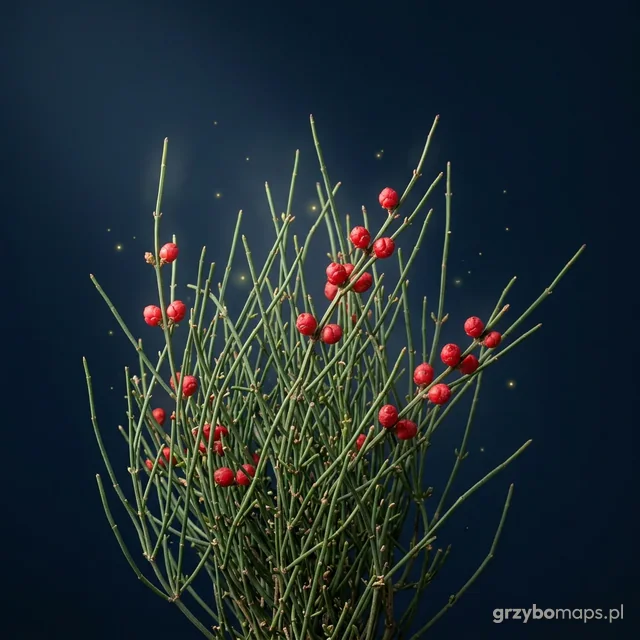
A low, rod-like shrub growing to about 30–50 cm, with green, thin, jointed shoots resembling horsetail and almost leafless (leaves reduced to scales). It is a gymnosperm – instead of flowers it has tiny cones, and the female ones ripen into red, fleshy “berries”.
Where it comes from
Dry steppes, deserts and slopes of Mongolia, northern China and Russia; the genus Ephedra occurs in dry regions all over the world, including around the Mediterranean Sea. In Poland, ephedra species are found only in rock gardens and botanical gardens.
History
Ma huang has been used in traditional Chinese medicine for over 2000 years, for asthma, colds and cough among other things; the classic work “Shennong Bencao Jing” mentions it. In 1885 the Japanese chemist Nagai Nagayoshi isolated ephedrine from it, which became an important drug that widens the bronchi and raises blood pressure. In the 1990s, ephedra supplements became popular “fat burners” and sports aids in the USA, until, after a series of deaths (including the death of baseball player Steve Bechler in 2003), the US agency FDA banned them in 2004. The related species Ephedra nevadensis was drunk by pioneers in the Wild West as “Mormon tea”.
Legend and truth
Myth: “ephedra is a natural, safe fat burner”. The slimming effects are small, and supplements with ephedra alkaloids have been linked to strokes, heart attacks and deaths – which is why their sale was banned in the USA and the EU.
Substances
Ephedrine, pseudoephedrine, norephedrine, norpseudoephedrine (cathine), methylephedrine.
How it works
Ephedrine has a sympathomimetic action: it stimulates the release of noradrenaline and adrenergic receptors, widens the bronchi, raises blood pressure and heart rate, reduces appetite and stimulates the nervous system. The effects appear within several dozen minutes and last a few hours.
What it is sometimes confused with
- horsetail (Equisetum)
- common broom (Cytisus scoparius)
Law in Poland
In Poland the plant is not banned as an ornamental, but ephedrine and pseudoephedrine are category 1 drug precursors, and medicines containing ephedrine are available on prescription only; supplements with ephedra alkaloids are not authorised for sale in the EU.
Fun fact
Pseudoephedrine from ma huang is a substance still present today in popular cold tablets – which is why in Poland since 2015 you can buy only one pack of such medicines at a time.
Frequently asked questions
How does ephedra work?
Ephedrine has a sympathomimetic action: it stimulates the release of noradrenaline and adrenergic receptors, widens the bronchi, raises blood pressure and heart rate, reduces appetite and stimulates the nervous system. The effects appear within several dozen minutes and last a few hours.
What are the risks of ephedra?
Dangerous. It risks high blood pressure, heart rhythm disorders, heart attack, stroke and seizures, especially in combination with caffeine, physical exertion and heat; deaths of young athletes have been described. Dangerous interactions with MAO inhibitors, blood pressure medicines and other stimulants. With long-term use, insomnia, anxiety, psychoses and kidney stones are possible. Ephedrine is a precursor for the illegal production of methamphetamine.
Ephedra and the law in Poland: what is allowed?
In Poland the plant is not banned as an ornamental, but ephedrine and pseudoephedrine are category 1 drug precursors, and medicines containing ephedrine are available on prescription only; supplements with ephedra alkaloids are not authorised for sale in the EU.