

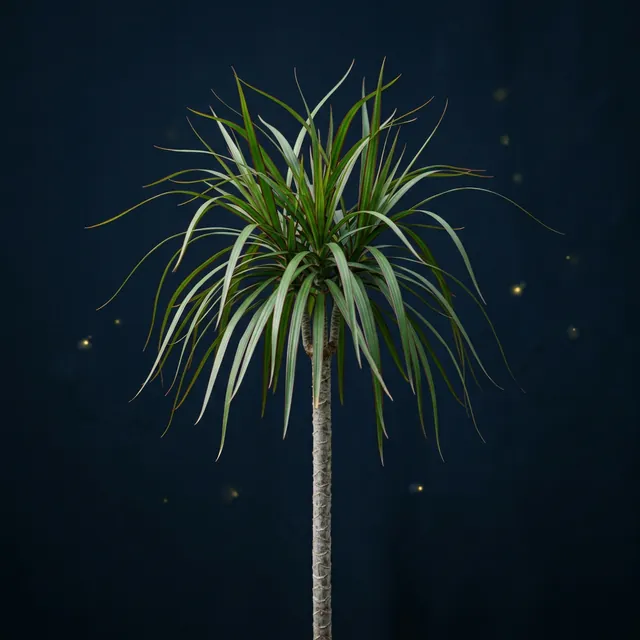
Madagascar dragon tree
Dracaena marginata Lam. (syn. D. cincta)
Polish folk names: dracena, smocze drzewo, dracena Marginata
Symptoms of poisoning
In cats and dogs: vomiting (sometimes with blood), drooling, loss of appetite, apathy, dilated pupils in cats. In humans after eating leaves: nausea and diarrhoea.
What it looks like
Potted "tree" up to 2–3 m. A thin, narrow trunk with horizontal leaf scars, topped by a tuft of narrow, arching leaves (up to 60 cm), green with a red-brown edge. Practically does not flower indoors.
What it is sometimes confused with
- yucca – leaves stiff, ending in a spine, without a red border
- snake plant (sansevieria) – leaves broad and fleshy, growing straight from the rhizome
The information is educational and describes traditional use according to EMA/HMPC monographs (the European Medicines Agency and its Committee on Herbal Medicinal Products).It does not replace the advice of a doctor or pharmacist. Never eat a plant you are not 100% sure you recognise.
Frequently asked questions
Is dragon tree poisonous to cats?
Yes, but it usually ends with mild discomfort. Saponins. In cats, besides vomiting, dilated pupils may occur.
Is dragon tree poisonous to dogs?
Yes, but it usually ends with mild symptoms. The symptoms are similar to those in a cat, and their severity depends on the amount of the plant eaten and the size of the dog.
Is dragon tree poisonous to children?
No, it is considered a safe plant.
What should I do if an animal or a child eats a piece of this plant?
Remove the remains from the mouth, give a little water and keep a piece of the plant. For an animal, call a vet; for a child, a doctor. If symptoms are worrying, call 112.