

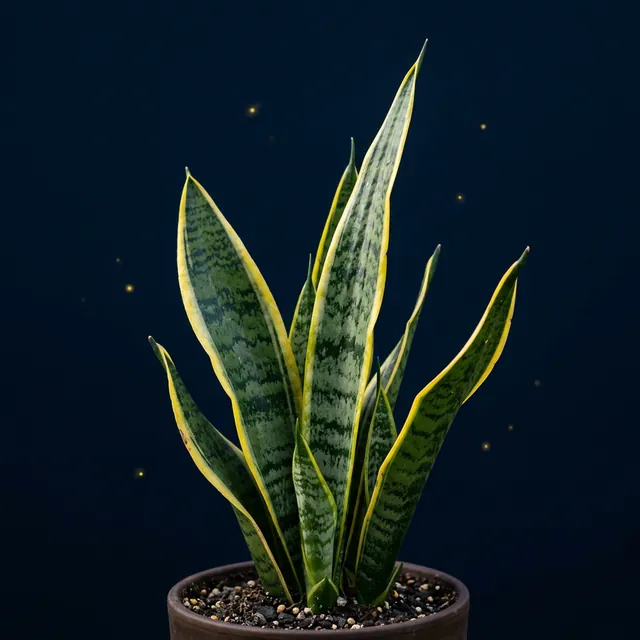
Snake plant
Dracaena trifasciata (Prain) Mabb. (syn. Sansevieria trifasciata Prain)
Polish folk names: sansewieria, język teściowej, wężownica
Symptoms of poisoning
After chewing a leaf: nausea, vomiting, diarrhoea, drooling in animals. Usually mild and short.
What it looks like
A stemless pot perennial, 30–100 cm. Leaves stiff, fleshy, sword-shaped, upright, dark green with grey-green cross bands, with a yellow edge in varieties. It rarely blooms, with fragrant, creamy flowers in a cluster.
What it is sometimes confused with
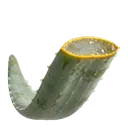
- aloe – also has fleshy, stiff leaves, but with spines on the edge and a gel-like pulp
The information is educational and describes traditional use according to EMA/HMPC monographs (the European Medicines Agency and its Committee on Herbal Medicinal Products).It does not replace the advice of a doctor or pharmacist. Never eat a plant you are not 100% sure you recognise.
Frequently asked questions
Is snake plant poisonous to cats?
Yes, but it usually ends with mild discomfort. Saponins: drooling and vomiting after chewing a leaf.
Is snake plant poisonous to dogs?
Yes, but it usually ends with mild symptoms. The symptoms are similar to those in a cat, and their severity depends on the amount of the plant eaten and the size of the dog.
Is snake plant poisonous to children?
Yes, but it usually ends with mild symptoms. Keep the plant out of reach of small children.
What should I do if an animal or a child eats a piece of this plant?
Remove the remains from the mouth, give a little water and keep a piece of the plant. For an animal, call a vet; for a child, a doctor. If symptoms are worrying, call 112.