

Acorns
Quercus robur L., Quercus petraea (Matt.) Liebl. (owoce)
Polish folk names: żołędzie dębowe
Traditional use
Acorns are the fruits of the oak, rich in starch and tannins. For centuries they were fodder for pigs, and in poverty and during wars food for people: after the tannins were leached out, flour and acorn coffee were made from them. Acorn coffee was also sometimes given as a home remedy for diarrhoea, because tannins have an astringent effect. There are no studies confirming a medicinal effect.
When to pick
In September and October, when ripe acorns fall on their own. Throw away those with a small hole (there is a larva inside) and those that float in water.
How to leach out the tannins
- Peel the acorns and crush them.
- Cover with cold water and change it 1–2 times a day for a few days, until it stops turning brown and the acorns are no longer bitter. You can also boil them in several changes of water.
- Dry them, then grind into flour or roast for acorn coffee.
What it looks like
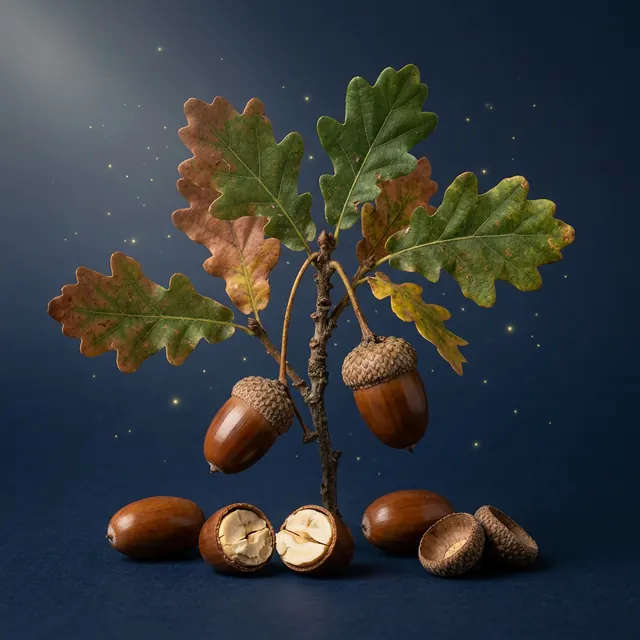
Shiny, brown, oblong fruits 2–3 cm long, set in a scaly cup. In pedunculate oak they hang on long stalks, in sessile oak they sit right against the twig.
Harvest
Gathered: fruits (acorns).
When: September – October.
Form: acorn flour, acorn coffee.
Lookalikes
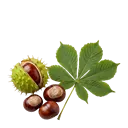
- horse chestnut: shiny, round seeds without a cupule, POISONOUS
- red oak: acorns are even more bitter
The information is educational and describes traditional use according to EMA/HMPC monographs (the European Medicines Agency and its Committee on Herbal Medicinal Products).It does not replace the advice of a doctor or pharmacist. Never eat a plant you are not 100% sure you recognise.