

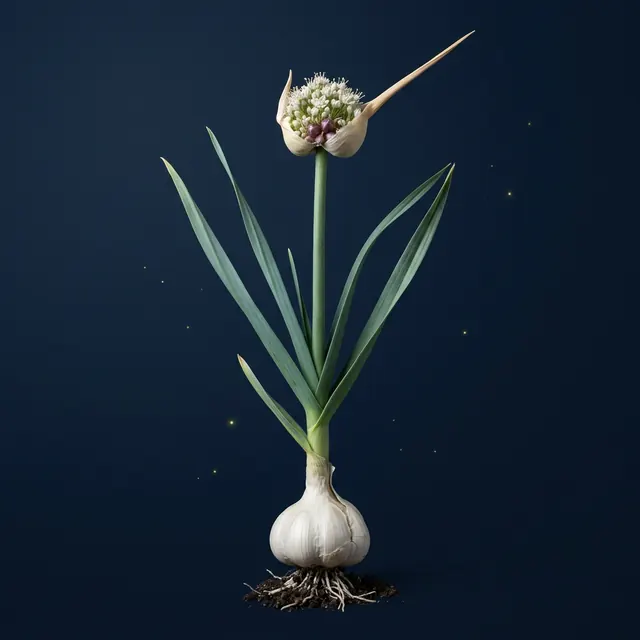
Garlic
Allium sativum L.
Polish folk names: czosnek zwyczajny, czosnek
Traditional use
Traditionally (EMA/HMPC) as a supportive agent in the prevention of atherosclerosis and for relieving cold symptoms. A Cochrane review (2014) found insufficient evidence that garlic prevents colds or shortens them.
What it looks like
Plant 20–100 cm tall with a globular, slightly flattened bulb made up of angular cloves covered in white or pinkish scales. Leaves linear, flat or channelled, blue-green. A globular umbel of whitish or pinkish flowers with aerial bulbils, enclosed in a membranous spathe with a long beak.
Harvest
Gathered: bulb (head, cloves).
When: July – August.
Form: kitchen, powder (ready-made preparations).
Lookalikes
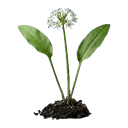
- ramsons (wild garlic) - grows wild in forests, broad leaves; the same smell
- bulbs of daffodils and tulips - poisonous; without a garlic smell and without cloves
The information is educational and describes traditional use according to EMA/HMPC monographs (the European Medicines Agency and its Committee on Herbal Medicinal Products).It does not replace the advice of a doctor or pharmacist. Never eat a plant you are not 100% sure you recognise.