

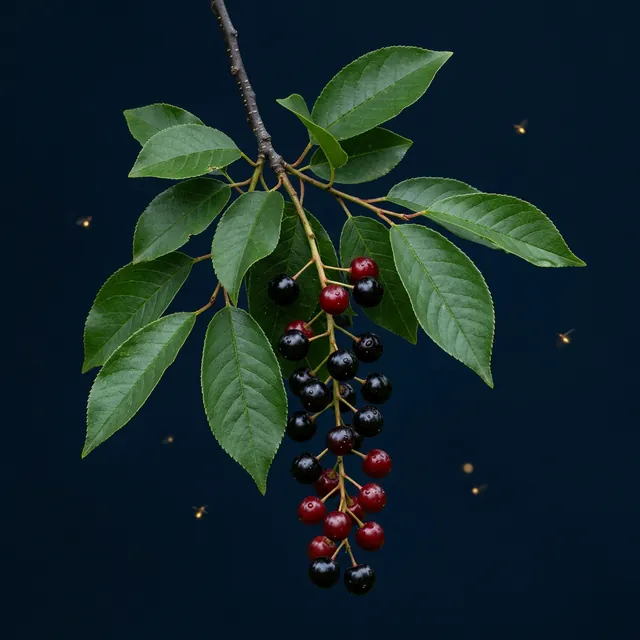
American bird cherry
Prunus serotina Ehrh. (syn. Padus serotina (Ehrh.) Borkh.)
Polish folk names: czeremcha późna, wiśnia amerykańska
Symptoms of poisoning
After eating the pits, leaves or bark: headache, dizziness, nausea, vomiting, rapid breathing, and in severe cases convulsions and loss of consciousness. Especially dangerous for cattle, horses and goats, which eat the wilted leaves from broken branches.
What it looks like
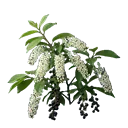
A tree or shrub up to 20 m, in Poland usually 3–8 m in the understorey of pine forests. Leaves elliptical, leathery, dark green and glossy, finely serrated. White flowers in upright clusters in May–June. Fruits round, about 1 cm, first red, black when ripe. The bark smells bitterly of almonds.
What it is sometimes confused with
- bird cherry (Prunus padus) – blooms in May in drooping clusters and has matt leaves; the American one blooms later, has stiff, upright clusters and leathery, glossy leaves
- wild cherry (Prunus avium) – fruits on long stalks in bunches, not in clusters
The information is educational and describes traditional use according to EMA/HMPC monographs (the European Medicines Agency and its Committee on Herbal Medicinal Products).It does not replace the advice of a doctor or pharmacist. Never eat a plant you are not 100% sure you recognise.