

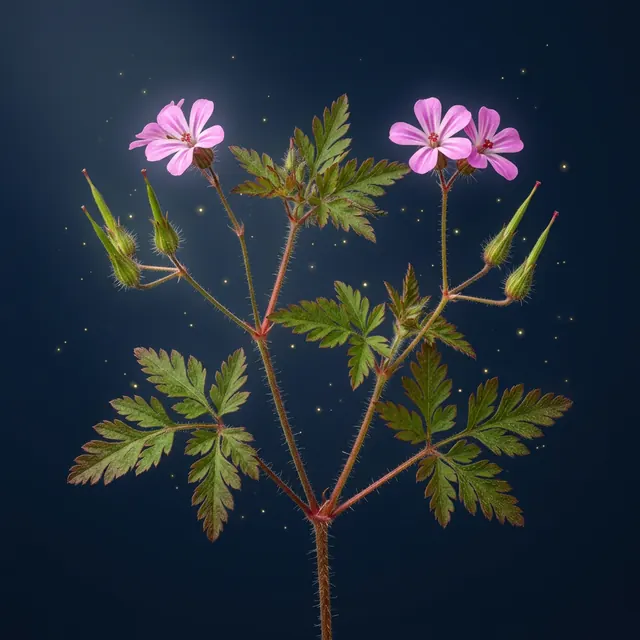
Herb Robert
Geranium robertianum L.
Polish folk names: pychawiec
Traditional use
In folk medicine the crushed herb was applied to wounds and ulcers, and a decoction of the herb and roots was given for diarrhoea and nosebleeds. There is no EMA monograph. A 2025 review of studies describes tannins, flavonoids and essential oil, and antioxidant and antibacterial action in the laboratory, but the authors stress that knowledge is still limited and there are no clinical studies.
What it looks like
Plant 20–40 cm tall, hairy, with brittle, often reddish stems and an unpleasant smell when crushed. Leaves triangular in outline, palmately 3–5-parted, with deeply cut segments. Flowers pink, about 1–1.6 cm, in pairs on a stalk, petals with white stripes. Fruit with a long beak.
Harvest
Gathered: herb (aerial parts).
When: May – August.
Form: infusion, compress.
Lookalikes
- small-flowered cranesbill and other small cranesbills – similar, flowers smaller, without the unpleasant smell; harmless
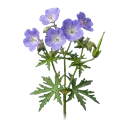
- meadow cranesbill – much larger, blue-violet flowers; harmless
The information is educational and describes traditional use according to EMA/HMPC monographs (the European Medicines Agency and its Committee on Herbal Medicinal Products).It does not replace the advice of a doctor or pharmacist. Never eat a plant you are not 100% sure you recognise.