

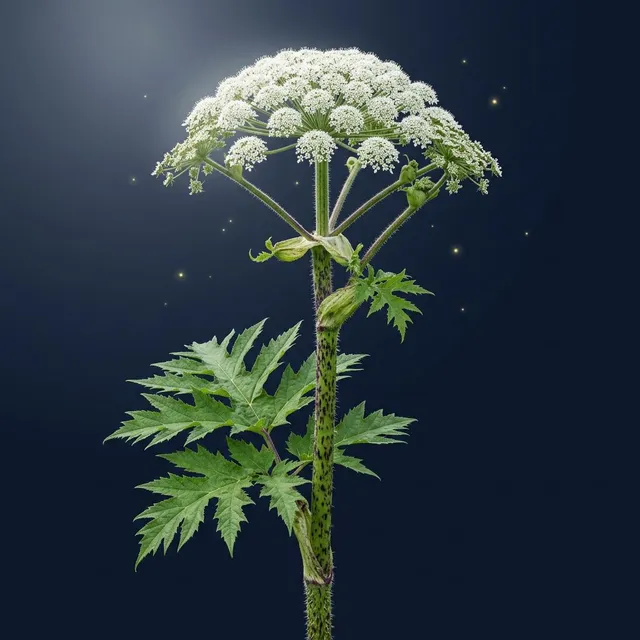
Giant hogweed
Heracleum mantegazzianum Sommier & Levier
Polish folk names: barszcz kaukaski, barszcz olbrzymi
Symptoms of poisoning
After contact with the sap and sunlight, usually within a day: redness, swelling and blisters as with a burn, sometimes extensive. The skin heals over weeks and may remain dark and sensitive to sun for years. Sap in the eye threatens damage to eyesight.
What it looks like
Giant perennial 2–5 m tall. Stem thick, up to 10 cm across, hollow inside, covered in purple blotches and stiff hairs. Leaves huge, up to 3 m, deeply cut, with sharp, jagged segments. The white compound umbels can be as much as half a metre across. Blooms in June and July.
What it is sometimes confused with
- Sosnowsky's hogweed – very similar, equally dangerous; differs in the shape of the leaves and fruits
- common hogweed – much smaller, up to 1.5 m, stem without purple blotches
- wild angelica and garden angelica – shorter, umbels spherical, stem without blotches
The information is educational and describes traditional use according to EMA/HMPC monographs (the European Medicines Agency and its Committee on Herbal Medicinal Products).It does not replace the advice of a doctor or pharmacist. Never eat a plant you are not 100% sure you recognise.