

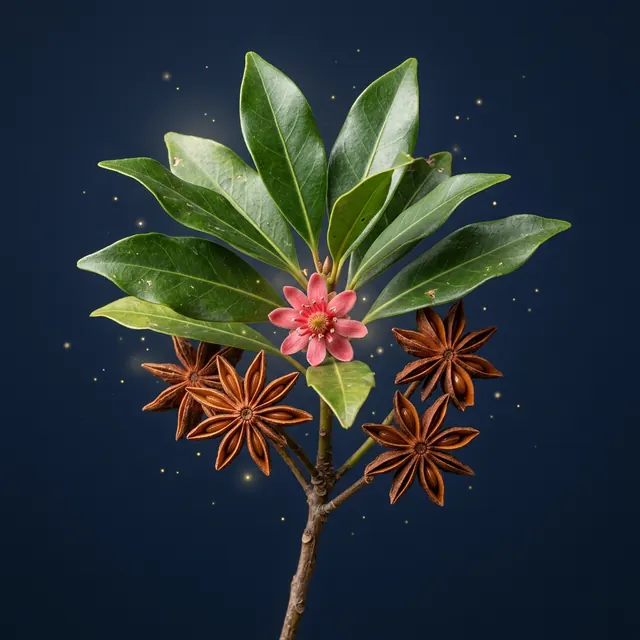
Star anise
Illicium verum Hook.f.
Polish folk names: anyż gwiazdkowy, anyż gwiaździsty, anyżek gwiazdkowy, badian
Traditional use
A spice of Chinese cuisine (the “five-flavour” blend) and Vietnamese cuisine (pho soup), also used for mulled wine and gingerbread. In old medicine the fruit was an expectorant and an antispasmodic for bloating – like ordinary anise. It has no EMA monograph of its own; star anise is part of some herbal blends “for digestion”.
What it looks like
Evergreen tree up to 10–15 m with leathery, elliptical leaves clustered at the ends of the shoots. Flowers pink to dark red. The fruit is made up of usually 8 boat-shaped, rusty-brown follicles arranged in a regular star; each holds one shiny brown seed. Smells sweet, of aniseed.
Harvest
Gathered: aggregate fruit.
Form: spice, infusion.
Lookalikes
- Japanese star anise (Illicium anisatum): POISONOUS. Fruits smaller, irregular, often with fewer than 8 arms, arms narrow and sharply pointed, scent weaker, more cardamom-like than aniseed-like. When dried and ground, practically impossible to tell apart with the naked eye
The information is educational and describes traditional use according to EMA/HMPC monographs (the European Medicines Agency and its Committee on Herbal Medicinal Products).It does not replace the advice of a doctor or pharmacist. Never eat a plant you are not 100% sure you recognise.