

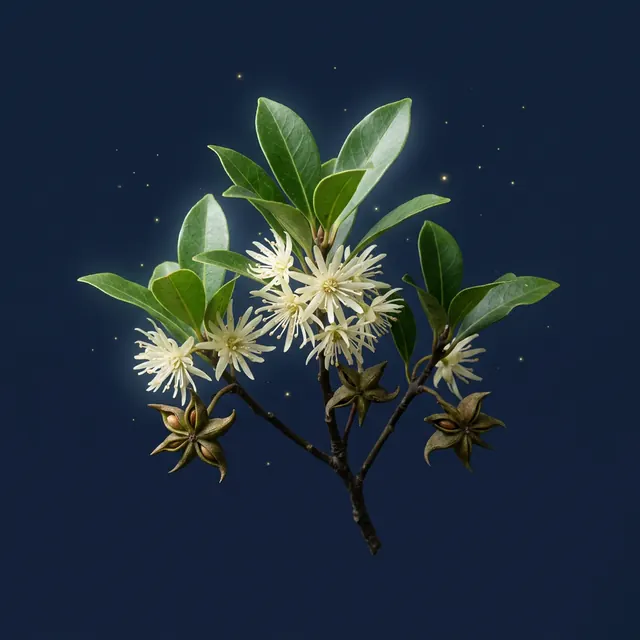
Japanese star anise
Illicium anisatum L.
Polish folk names: anyż japoński, shikimi, drzewo świątynne
Symptoms of poisoning
Vomiting, agitation, tremors, convulsions; inflammation of the kidneys, urinary tract and digestive tract. In infants after tea made from contaminated star anise: convulsions, irritability, myoclonus. If poisoning is suspected – emergency services (112) or a poison centre.
What it looks like
Evergreen shrub or small tree, 1.8–4.6 m, from Japan, Korea and Taiwan. Leaves oval, 2.5–7.5 cm. Flowers cream or white, with many narrow petals. The fruit resembles star anise but is smaller and irregular, often with underdeveloped arms, more yellowish, with sharp, hooked tips and a faint smell.
What it is sometimes confused with
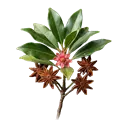
- Chinese star anise – star anise (the spice)
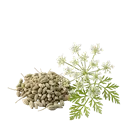
- anise (the fruit of Pimpinella anisum)
The information is educational and describes traditional use according to EMA/HMPC monographs (the European Medicines Agency and its Committee on Herbal Medicinal Products).It does not replace the advice of a doctor or pharmacist. Never eat a plant you are not 100% sure you recognise.