

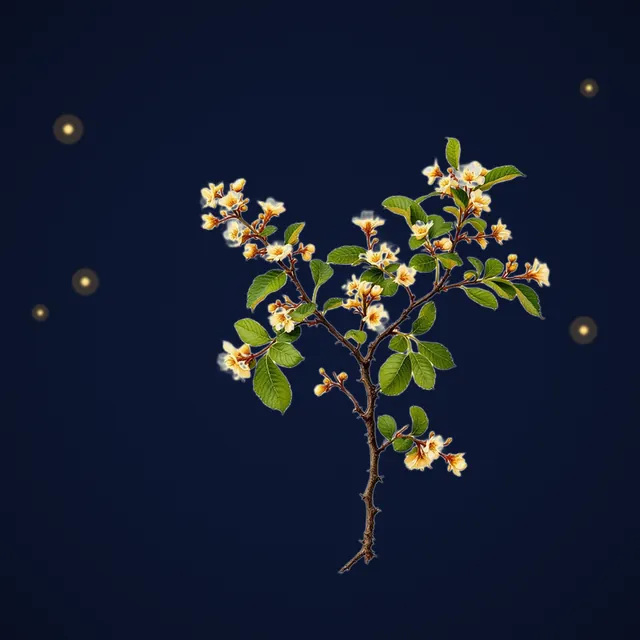
Senegal acacia
Senegalia senegal (L.) Britton (syn. Acacia senegal)
Polish folk names: guma arabska, guma akacjowa, hashab
Traditional use
Gum arabic is the hardened sap of cut bark. Even ancient Egyptian medical papyri mention it as a binder of ointments and pills. To this day it is in pharmacopoeias as an excipient: in lozenges it soothes an irritated throat, and it thickens syrups and emulsions. In food it has the code E414. It is a soluble fibre that gut bacteria ferment.
What it looks like
A low, thorny savanna tree 5–12 m tall with a flat crown. Under each node three hooked thorns. Leaves small, grey-green, bipinnate. Flowers cream-coloured, in spikes. From wounds in the bark flows gum that hardens into amber tears.
Harvest
Gathered: gum from the trunk and branches.
Form: powder, pastylki, food additive (E414).
Lookalikes
- black locust (the “acacia” of Polish towns) – a different tree, with poisonous bark and seeds
- other gum-yielding acacias (Vachellia seyal) – give a lower-quality gum
The information is educational and describes traditional use according to EMA/HMPC monographs (the European Medicines Agency and its Committee on Herbal Medicinal Products).It does not replace the advice of a doctor or pharmacist. Never eat a plant you are not 100% sure you recognise.