

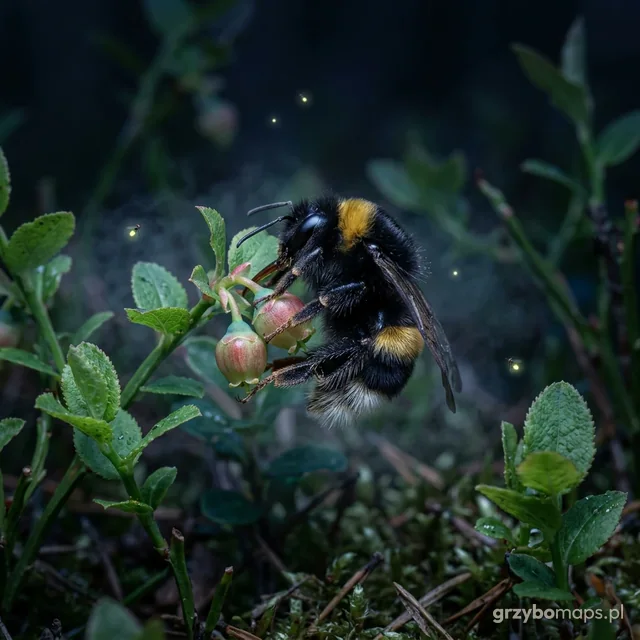
Buff-tailed bumblebee
Bombus terrestris
A fluffy and gentle pollinator that flies even on cool, cloudy days. It nests in the ground, most often in abandoned rodent burrows. In Poland bumblebees are protected; the buff-tailed bumblebee only partly.
How to recognise
- Large and stocky, queen up to about 2.5 cm
- Dense fur, two yellow bands: on the front of the thorax and on the abdomen
- White tip of the abdomen
- A low, calm buzz
Where it lives
Forest edges, glades, clearcuts, meadows, gardens. Nests in the ground, under tufts of grass.
When you'll see it
Queens from March, colonies in summer until September. Only fertilised queens overwinter in the ground.
Tracks
The opening of a small burrow in the ground or under moss, into which bumblebees fly. Inside, wax pots with honey and pollen.
Tracks
Close-up of an abandoned rodent burrow entrance under moss and dry grass with a bumblebee entering, small nest opening in forest soil, realistic.
When you meet it
A bumblebee stings very rarely, usually only when squashed. It does not leave its stinger. If it does sting, a cold compress is enough, and with signs of allergy, as with a bee, call 112. Do not dig up the nests; they are protected.
Role in the forest
One of the most important pollinators of bilberries, raspberries, clovers and many forest flowers. It can pollinate by vibration, shaking the pollen out of the anthers.
Fun fact
Before taking off, a bumblebee shivers its flight muscles, warming its thorax to over 30 degrees. That lets it fly when honey bees stay in their hives.