

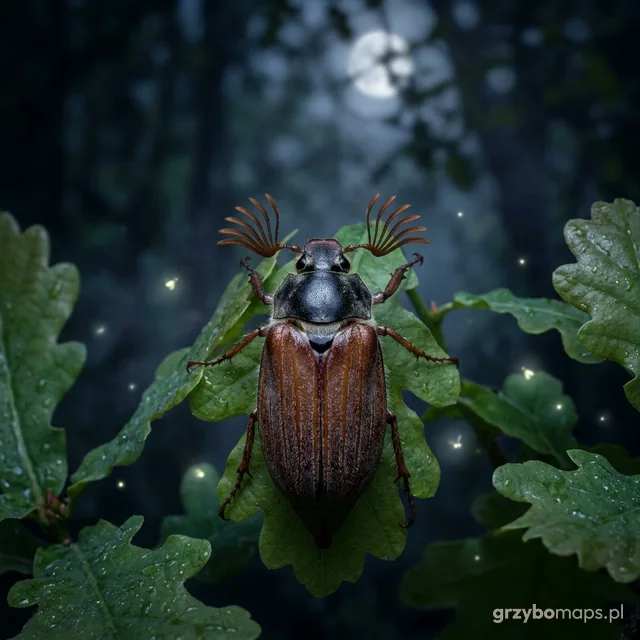
Common cockchafer
Melolontha melolontha
A buzzing beetle of May evenings. Adults eat tree leaves, and the grubs live in the soil for several years and gnaw roots, which in nurseries and young plantations can be serious damage. In forests the very similar forest cockchafer is more often encountered.
How to recognise
- Length 2 to 3 cm, brown wing covers, black pronotum
- Antennae ending in a fan: 7 lamellae in the male, 6 in the female
- Triangular white patches on the sides of the abdomen
- Abdomen ending in a pointed projection
Where it lives
Forest edges, groves, parks, orchards. Grubs in sandy soil.
When you'll see it
Swarming from late April to June, at dusk. Mass outbreaks every few years.
Tracks
Gnawed leaves of oaks, beeches and birches. In the soil, white grubs curved into an arc with a brown head.
Tracks
Close-up of a cockchafer grub, white C-shaped larva with brown head, in sandy forest soil among pine roots, realistic soil cross-section.
When you meet it
Harmless to humans. Foresters monitor grubs in the soil because in a mass outbreak they destroy the roots of young trees.
Role in the forest
Food for bats, birds, foxes and wild boars, which dig up the soil in search of grubs. In large numbers a pest of forest crops.
Fun fact
Development usually takes 3 to 4 years, which is why mass flights of cockchafers recur at roughly that rhythm.