

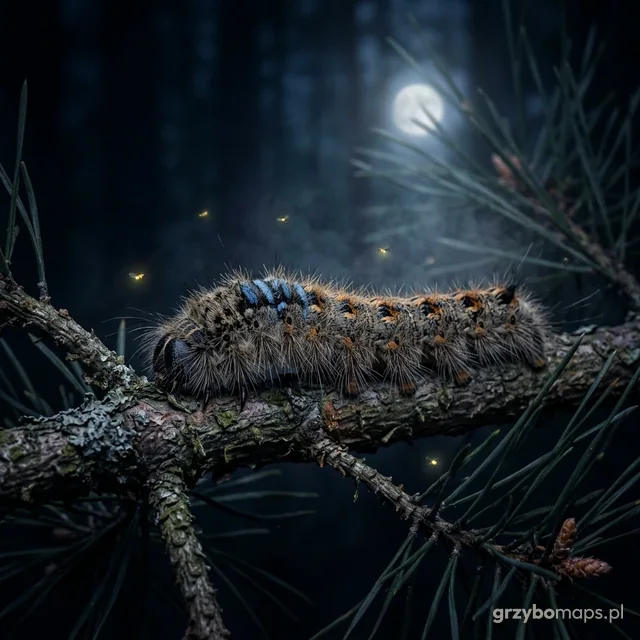
Pine-tree lappet
Dendrolimus pini
A large brown-grey moth and one of the most dangerous pests of pine. Its caterpillars grow to several centimetres and eat needles. They overwinter in the litter, where foresters count them in autumn to assess the threat.
How to recognise
- Wingspan 5 to 8 cm, grey-brown wings with a rusty band
- A small white spot on the forewing
- Caterpillar up to 8 cm, grey-brown, with two steel-blue bands behind the head
- Large cocoons attached to trunks and branches
Where it lives
Pine forests, especially dry ones, on poor, sandy soils.
When you'll see it
Moths in July and August. Caterpillars feed in autumn and spring and overwinter in the litter.
Tracks
Grey silk cocoons on pine bark, gnawed needles, round caterpillar droppings under the trees.
Tracks
Close-up of a grey silky cocoon of the pine-tree lappet attached to reddish pine bark, realistic forest light.
When you meet it
Do not touch the caterpillars with a bare hand: the hairs in the blue bands sting and can irritate the skin. After contact, wash your hands and do not rub your eyes.
Role in the forest
Food for cuckoos, which are among the few birds that eat hairy caterpillars, and for many parasites. In pine monocultures a dangerous pest.
Fun fact
Autumn searches for caterpillars in the litter are one of the traditional methods of forecasting threats in Polish forestry.