

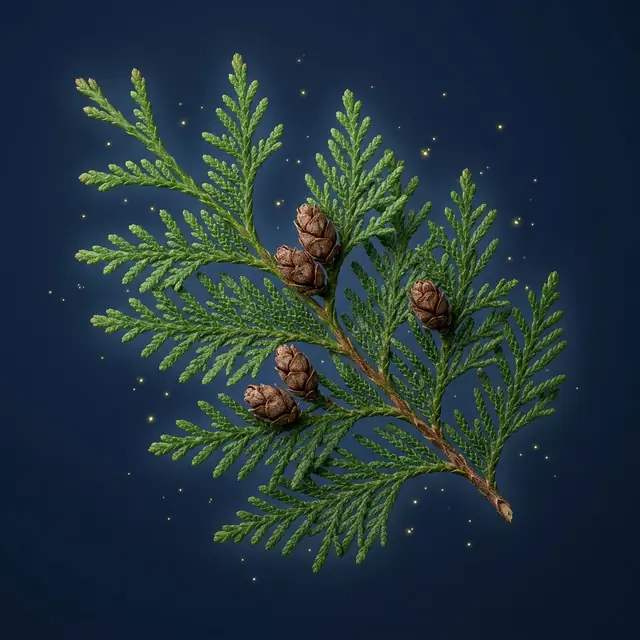
Western thuja
Thuja occidentalis L.
Polish folk names: tuja, thuja
Symptoms of poisoning
After eating twigs: nausea, vomiting, diarrhoea, abdominal pain. After a larger amount convulsions, heart rhythm disturbances and kidney damage are possible. Trimming a hedge for a long time with bare hands can irritate the skin.
What it looks like
Tree or shrub of narrow, conical habit, usually 2–6 m in gardens. Branchlets flattened, covered in tiny, close-pressed scales, smelling of resin when crushed. Cones small, oblong, 1 cm, first greenish, then brown.
What it is sometimes confused with
- false cypress: a very similar garden conifer, also contains irritating oils
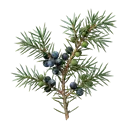
- juniper: has prickly needles and blue, berry-like cones
The information is educational and describes traditional use according to EMA/HMPC monographs (the European Medicines Agency and its Committee on Herbal Medicinal Products).It does not replace the advice of a doctor or pharmacist. Never eat a plant you are not 100% sure you recognise.