

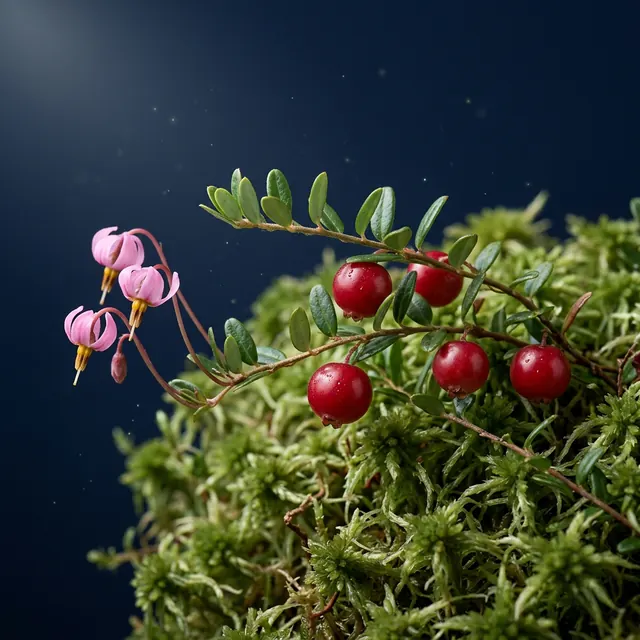
Small cranberry
Vaccinium oxycoccos L. (syn. Oxycoccus palustris Pers.)
Polish folk names: żurawina
Traditional use
There is no EMA monograph for the small cranberry. The EMA monograph concerns the related large cranberry (Vaccinium macrocarpon): traditionally (EMA/HMPC) its juice relieves the symptoms of mild, recurrent lower urinary tract infections in adult women and helps prevent them, after a serious disease has been ruled out by a doctor. In folk medicine small cranberry juice was used for urinary tract diseases, fever and vitamin deficiencies. The fruits are sour and rich in vitamin C and organic acids. Studies were conducted mainly on the American cranberry.
What it looks like
Creeping dwarf shrub of peat bogs with thin shoots up to 1 m long. Leaves evergreen, small (8–10 mm), ovate, with rolled-under margins, bluish-white beneath. Pink flowers on long stalks have petals bent backwards. Fruits are globose red berries up to 1 cm across, lying on the moss.
Harvest
Gathered: fruit.
When: September – October.
Form: juice, syrup, fruit jelly drink, kitchen (preserve, jelly).
Lookalikes
- Lingonberry - also red fruits, but it is an upright dwarf shrub with larger, leathery leaves and white bell-shaped flowers; edible
- Marsh Labrador tea - grows in the same peat bogs, is poisonous and protected; it has narrow leaves with rusty felt underneath and white flowers in corymbs, and has no red berries
The information is educational and describes traditional use according to EMA/HMPC monographs (the European Medicines Agency and its Committee on Herbal Medicinal Products).It does not replace the advice of a doctor or pharmacist. Never eat a plant you are not 100% sure you recognise.