

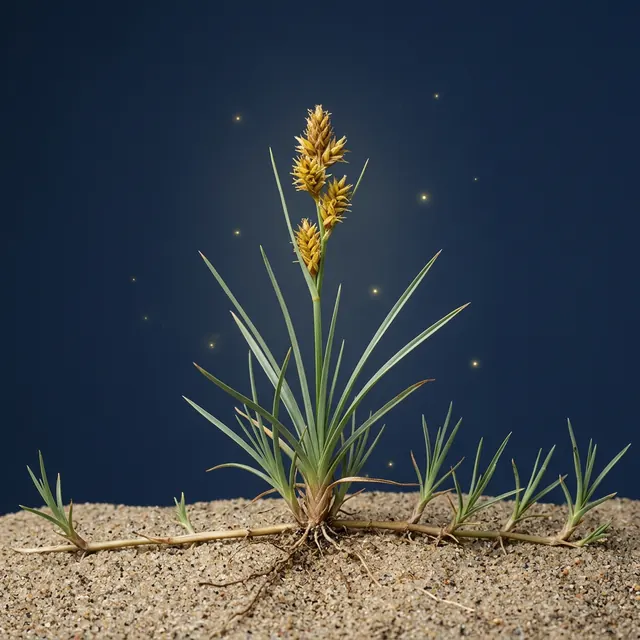
Sand sedge
Carex arenaria L.
Polish folk names: niemiecka sarsaparyla (nazwa z niemieckiego), Rhizoma Caricis arenariae
Traditional use
In old folk medicine the rhizome was considered a “blood-cleansing”, diuretic and sweat-inducing remedy; it was called German sarsaparilla. Today it is practically unused in herbalism. There are no efficacy studies and no EMA monograph. Its role in nature is more important: it is a pioneer plant that stabilises dunes.
What it looks like
Perennial of dunes and sands, 15–60 cm, with a long (up to 2 m), straight creeping rhizome from which shoots grow at regular intervals – hence the characteristic rows of tufts on the sand. Stem sharply three-angled. Leaves stiff, channelled, 2–4 mm wide. Inflorescence of 4–16 ovoid, yellow-brown spikelets up to 1 cm; male flowers in the upper part, female in the lower.
Harvest
Gathered: rhizome.
Form: decoction.
Lookalikes
- other sedges and dune grasses (e.g. marram grass) – harmless, but also often protected
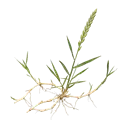
- couch grass – similar creeping rhizomes, but it is a grass with a spike
The information is educational and describes traditional use according to EMA/HMPC monographs (the European Medicines Agency and its Committee on Herbal Medicinal Products).It does not replace the advice of a doctor or pharmacist. Never eat a plant you are not 100% sure you recognise.