

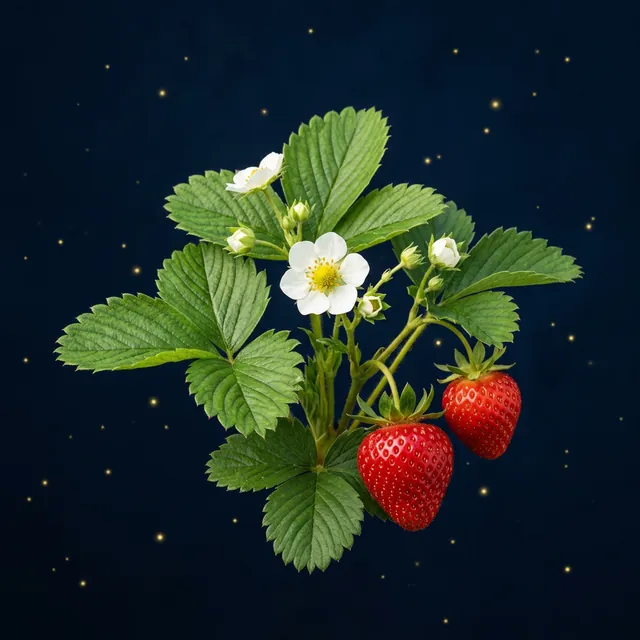
Garden strawberry
Fragaria × ananassa (Duchesne ex Weston) Duchesne ex Rozier
Polish folk names: truskawka, poziomka ogrodowa
Traditional use
The fruit is edible and rich in vitamin C. The leaves are sometimes dried for tea in folk medicine, but their medicinal effectiveness has not been confirmed. People with a fruit allergy may react to strawberry proteins.
What it looks like
Perennial, 15–30 cm, with runners. Leaves with three leaflets, each leaflet oblong-ovate, toothed at the edge, hairy underneath. Flowers white, five-petalled, with a yellow centre. The fruit is a thickened, juicy flower base, red, with tiny “seeds” (achenes) on the surface.
Harvest
Gathered: fruits, leaves (tea).
When: May – August.
Form: fresh, jam, frozen, leaves for tea.
Lookalikes
- wild strawberry – grows wild, the fruits are small and very aromatic; sometimes gathered in the forest
- musk strawberry and other wild strawberries – similar leaves, but smaller
The information is educational and describes traditional use according to EMA/HMPC monographs (the European Medicines Agency and its Committee on Herbal Medicinal Products).It does not replace the advice of a doctor or pharmacist. Never eat a plant you are not 100% sure you recognise.