

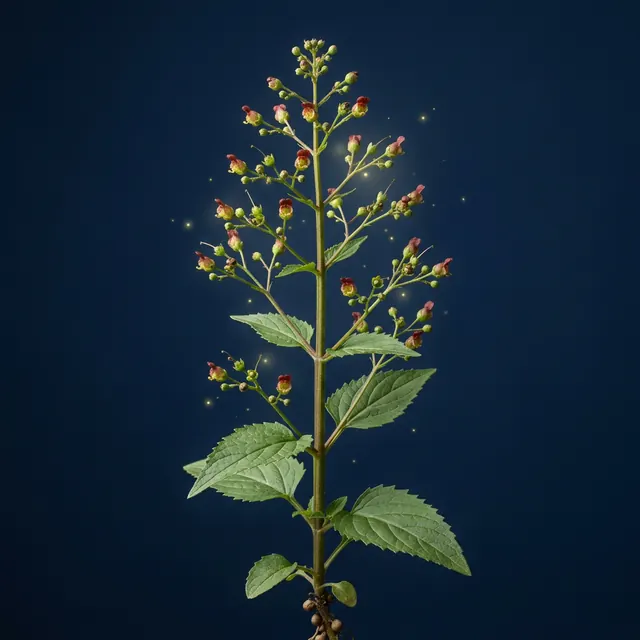
Common figwort
Scrophularia nodosa L.
Traditional use
In old herbal medicine it was used as an anti-inflammatory and for skin diseases; the Latin and Polish names are linked to the old belief that it cures scrofula. The leaves contain diosmin (a flavone used in medicines for varicose veins) and harpagoside. There is no EMA monograph. Studies are laboratory only, e.g. an antispasmodic effect of an extract on isolated rabbit intestine.
What it looks like
Perennial up to 120 cm with a straight, hairless, sharply four-angled stem and an unpleasant smell. Rhizome swollen like a tuber. Leaves opposite, large, ovate and toothed. Tiny flowers 5–8 mm, barrel-shaped, two-lipped, brown above and greenish below, in a loose panicle at the top.
Harvest
Gathered: leaves, herb (aerial parts).
When: June – August.
Form: compress.
Lookalikes
- winged figwort – stem with distinct wings, grows by water; also inedible
- nettle and dead-nettles – similar opposite toothed leaves, but completely different flowers
The information is educational and describes traditional use according to EMA/HMPC monographs (the European Medicines Agency and its Committee on Herbal Medicinal Products).It does not replace the advice of a doctor or pharmacist. Never eat a plant you are not 100% sure you recognise.