

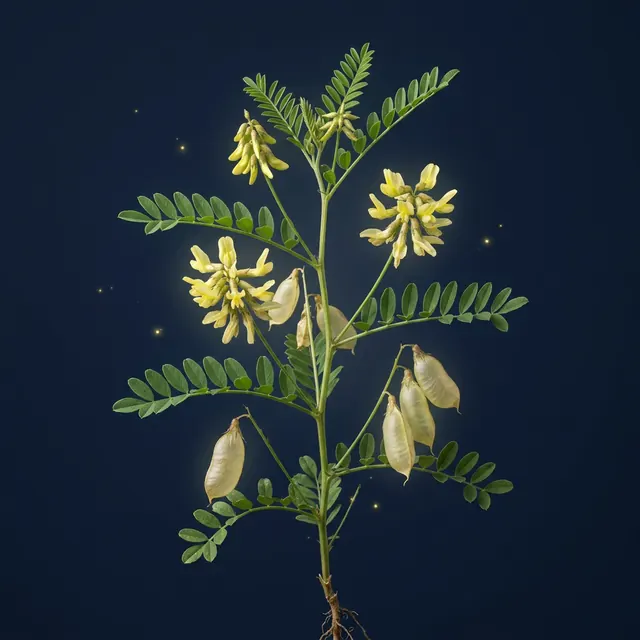
Mongolian milkvetch – huang qi
Astragalus mongholicus Bunge (syn. A. membranaceus var. mongholicus)
Polish folk names: huang qi, astragalus, traganek błoniasty (nazwa handlowa)
Traditional use
One of the basic herbs of Chinese and Mongolian medicine, used “for strengthening” and immunity. Reviews of studies (mainly Chinese) suggest, for example, less fatigue in cancer patients when combined with treatment, but the quality of the studies is low. There is no EMA monograph and no strong evidence in humans.
What it looks like
Perennial of the legume family, up to about 1 m. Leaves pinnate with many small, oval leaflets. Pea-type flowers, pale yellow, in loose racemes. Pods inflated, papery. Root long, a taproot, sold as yellowish, fibrous slices.
Harvest
Gathered: root.
Form: decoction, powder.
Lookalikes
- Liquorice milkvetch and other native milkvetches: wild plants from Poland, not a medicinal raw material
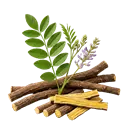
- Liquorice: the root is also yellowish and sweetish, but it is a different raw material with different contraindications
The information is educational and describes traditional use according to EMA/HMPC monographs (the European Medicines Agency and its Committee on Herbal Medicinal Products).It does not replace the advice of a doctor or pharmacist. Never eat a plant you are not 100% sure you recognise.