

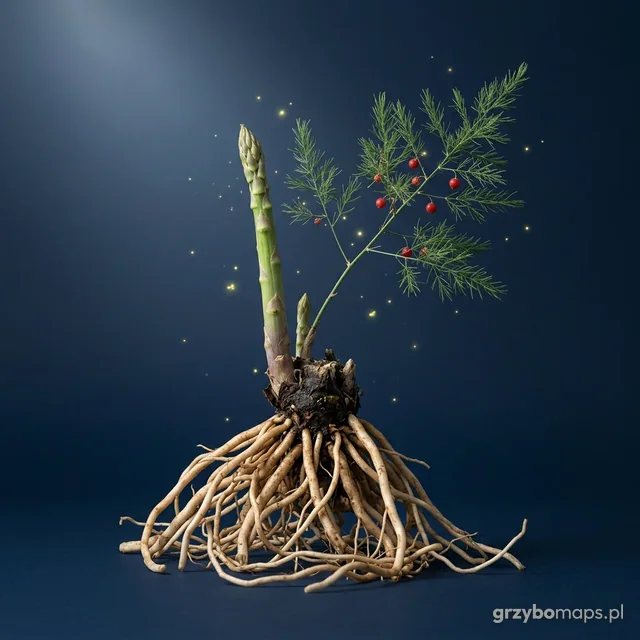
Asparagus
Asparagus officinalis L.
Polish folk names: szparagi
Traditional use
Traditionally the root as a diuretic, in Germany as support for inflammation of the urinary tract and prevention of stones. Contains asparagine, arginine and steroidal saponins. No EMA monograph, practically no clinical evidence.
What it looks like
Cultivated perennial, sometimes escaped into the wild. The young shoots are edible asparagus spears; older ones branch into a tall, feathery “plume” of needle-like branchlets. Fruits – red berries. Underground, dense, fleshy roots.
Harvest
Gathered: root with rhizome.
When: September – October.
Form: decoction.
The information is educational and describes traditional use according to EMA/HMPC monographs (the European Medicines Agency and its Committee on Herbal Medicinal Products).It does not replace the advice of a doctor or pharmacist. Never eat a plant you are not 100% sure you recognise.