

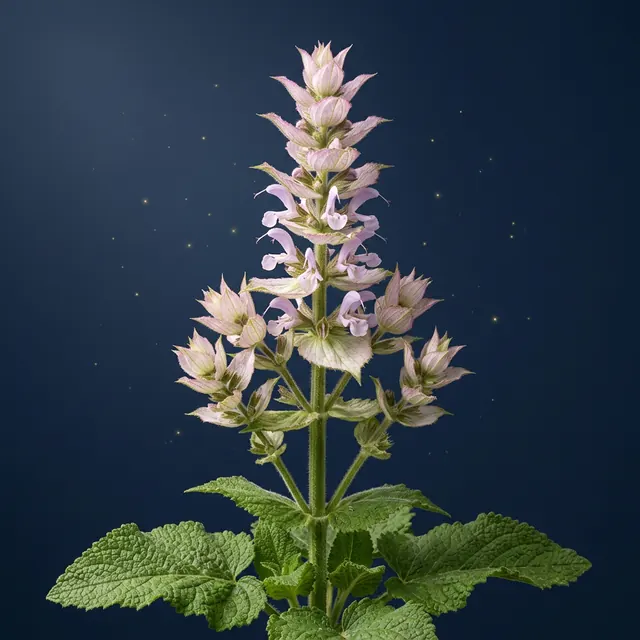
Clary sage
Salvia sclarea L.
Polish folk names: szałwia muszkatelowa
Traditional use
In the past an addition to wine and beer and a spice for dishes. In the Middle Ages it was used “for the eyes” – a mucilaginous seed was placed in the eye to draw out a foreign body (the English name “clary” comes from “clear-eye”). Today mainly a source of oil for perfumery and aromatherapy. Research concerns mainly the oil in the laboratory and in animals; there is no EMA monograph.
What it looks like
Biennial plant up to about 1 m, only a rosette in the first year. Stem four-angled, glandular-hairy, strongly scented. Leaves large, ovate-heart-shaped, wrinkled, unevenly toothed. Two-lipped flowers, lilac to pale blue, in false whorls, tucked between large pinkish-white bracts.
Harvest
Gathered: herb (aerial parts), essential oil from the flowering shoots.
When: June – August.
Form: kitchen, oil (aromatherapy).
Lookalikes
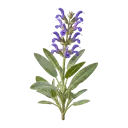
- Common sage: leaves smaller, narrow, silvery, without large coloured bracts
- Meadow sage: lower, dark blue flowers, without pinkish bracts
The information is educational and describes traditional use according to EMA/HMPC monographs (the European Medicines Agency and its Committee on Herbal Medicinal Products).It does not replace the advice of a doctor or pharmacist. Never eat a plant you are not 100% sure you recognise.