

Meadow clary
Salvia pratensis L.
Polish folk names: szałwia polna, polna salwija, granatek
Traditional use
In the past used as a weaker substitute for common sage: for gargling in a sore throat, for dressing ulcers and wounds, for cleaning teeth. It contains very little essential oil. It was also used to flavour beer (instead of hops) and wine, and the large leaves were sometimes used in the countryside instead of cabbage for cabbage rolls. Today mainly an ornamental and honey plant. There is no EMA monograph, and there are no clinical studies.
What it looks like
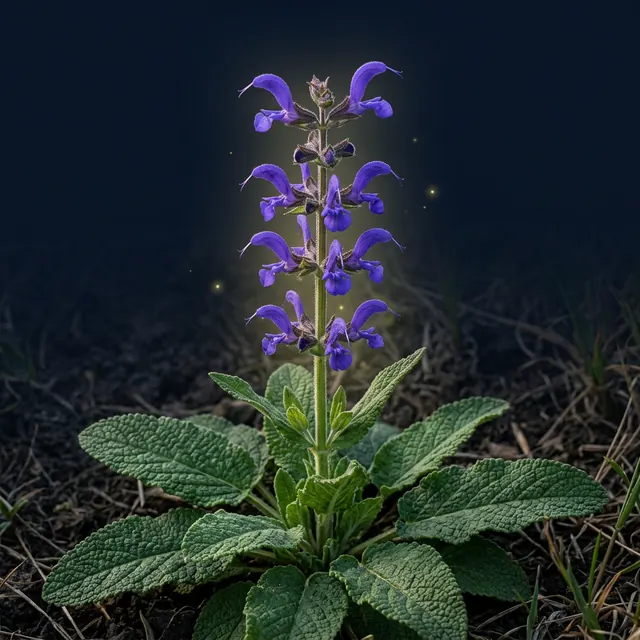
Perennial up to 60 cm (sometimes 1 m). Basal rosette of large, heart-shaped-ovate, strongly wrinkled leaves on long stalks. Upright, four-angled stem with several tiers of whorls of large, dark violet flowers 2–3 cm with a sickle-shaped upper lip. Grows in dry, sunny meadows and grassland.
Harvest
Gathered: leaf, herb (aerial parts).
When: May – July.
Form: rinse, compress, seasoning (formerly for beer and wine).
Lookalikes
- woodland sage and whorled clary – smaller flowers; harmless
- common sage – leaves grey-green, a subshrub; harmless
The information is educational and describes traditional use according to EMA/HMPC monographs (the European Medicines Agency and its Committee on Herbal Medicinal Products).It does not replace the advice of a doctor or pharmacist. Never eat a plant you are not 100% sure you recognise.