

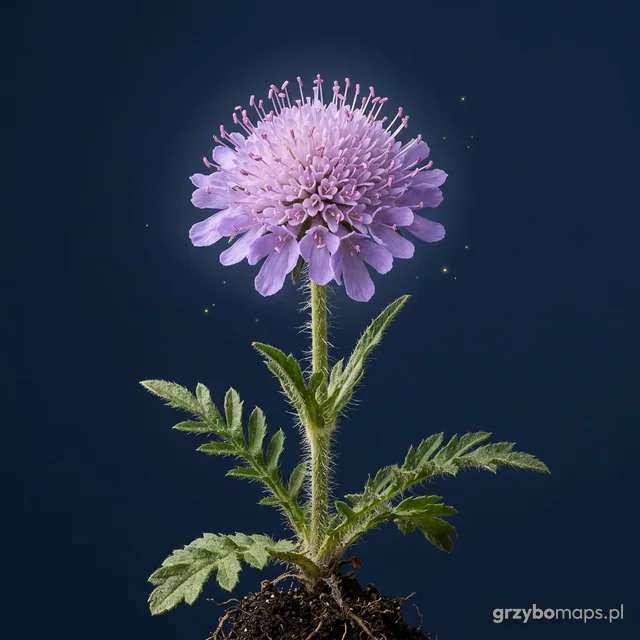
Field scabious
Knautia arvensis (L.) Coult.
Polish folk names: świerzbnica, drapacz polny
Traditional use
Traditionally it was used for respiratory infections and coughs, and in the past externally for skin diseases, eczema and scabies – hence the name.
What it looks like
Perennial of meadows and field margins up to 80 cm tall, roughly hairy. Lower leaves lyre-shaped, upper ones pinnately divided. Flat, lilac flower heads with larger marginal florets, resembling a pincushion.
Harvest
Gathered: herb (aerial parts).
When: June – August.
Form: infusion, compress.
Lookalikes
- Dove scabious (Scabiosa columbaria): paler flowers, calyx with long awns, more finely pinnate leaves
- Devil's-bit scabious: dark violet flowers, entire leaves, grows in damp meadows
The information is educational and describes traditional use according to EMA/HMPC monographs (the European Medicines Agency and its Committee on Herbal Medicinal Products).It does not replace the advice of a doctor or pharmacist. Never eat a plant you are not 100% sure you recognise.