

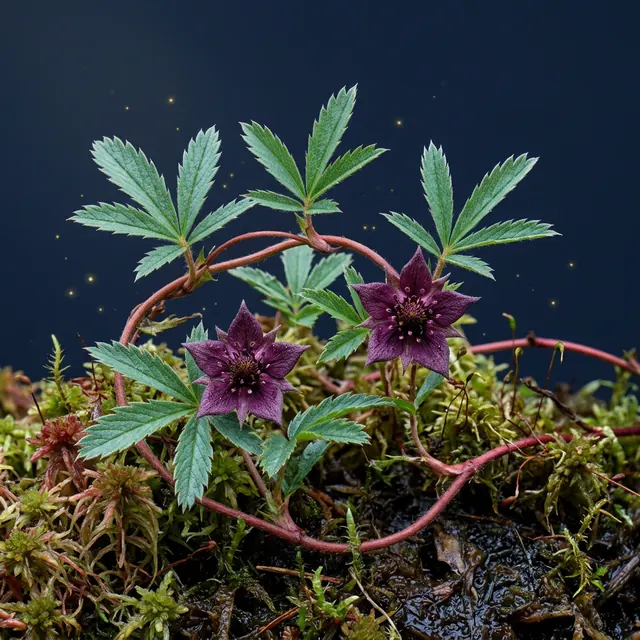
Marsh cinquefoil
Comarum palustre L. (syn. Potentilla palustris (L.) Scop.)
Polish folk names: pięciornik błotny
Traditional use
The Native Americans of North America used the rhizomes for dysentery and stomach pain. The plant is widely used in traditional medicine, including for joint pain. There is no EMA monograph. In a small, open study (15 people with knee osteoarthritis and diabetes, tablets for 28 days, no comparison group) pain decreased – this is too little to speak of effectiveness.
What it looks like
Perennial 20–90 cm tall with a long, woody rhizome, found on peat bogs and lake shores. Leaves odd-pinnate with 5–7 lanceolate, sharply serrated leaflets, bluish beneath. Flowers star-shaped, 2–3 cm: large sepals dark red-purple on the inside, petals half as long, dark purple, stamens also dark purple. In fruit, the receptacle is spongy like a small dry strawberry.
Harvest
Gathered: rhizome, herb (aerial parts).
When: June, July, September.
Form: decoction, infusion.
Lookalikes
- bogbean – grows in the same mats on the peat bog, but has leaves of 3 leaflets and white, fringed flowers; harmless
- other cinquefoils – flowers yellow, not dark purple; harmless
The information is educational and describes traditional use according to EMA/HMPC monographs (the European Medicines Agency and its Committee on Herbal Medicinal Products).It does not replace the advice of a doctor or pharmacist. Never eat a plant you are not 100% sure you recognise.