

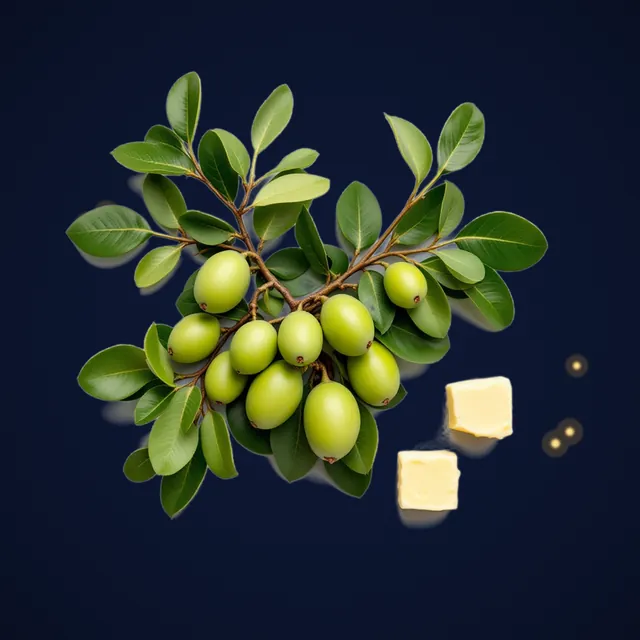
Shea tree
Vitellaria paradoxa C.F.Gaertn.
Polish folk names: masło shea, karité, drzewo masłowe
Traditional use
Shea butter is rendered from the kernels of the seeds. In West Africa it has been used for centuries as a cooking fat, for rubbing into the skin of infants and for protection from the sun and the dry harmattan wind. In old recipes it is the base of ointments. In cosmetics it works as a good emollient: it moisturises and softens the skin. In the EU it is also an approved fat in chocolate.
What it looks like
A savanna tree 7–15 m tall with thick, cracked, fire-resistant bark. Leaves oblong, leathery, clustered at the tips of the twigs. Flowers cream-coloured, fragrant. Fruit similar to a green plum, with one shiny brown seed.
Harvest
Gathered: fat from the seeds (shea butter).
Form: ointment, edible fat.
Lookalikes
- cocoa butter – harder, smells of chocolate, comes from the cacao tree
The information is educational and describes traditional use according to EMA/HMPC monographs (the European Medicines Agency and its Committee on Herbal Medicinal Products).It does not replace the advice of a doctor or pharmacist. Never eat a plant you are not 100% sure you recognise.