

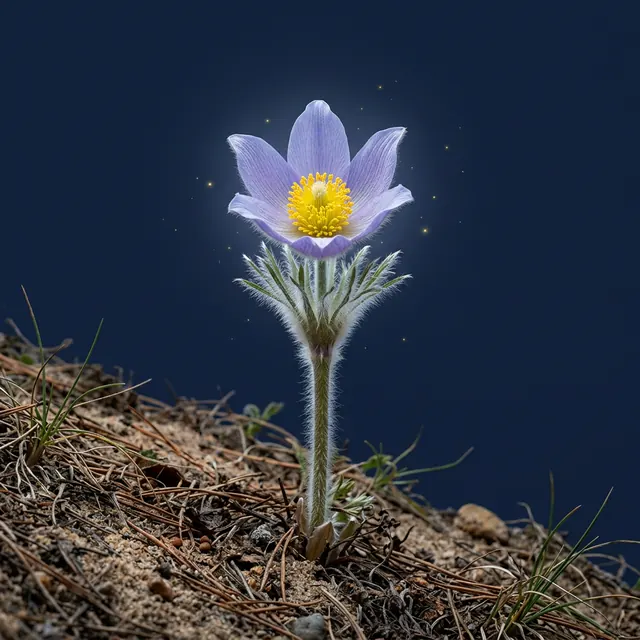
Eastern pasqueflower
Pulsatilla patens (L.) Mill.
Polish folk names: sasanka dzwonkowata
Symptoms of poisoning
The fresh sap irritates the skin and mucous membranes (redness, blisters). After eating: irritation of the mouth, vomiting, diarrhoea, abdominal pain.
What it looks like
Low perennial, 10–20 cm, densely covered in long white hairs. Flowers in March and April, before the leaves develop. Flowers solitary, upright, bell-shaped and wide open, 3–6 cm, with 6 violet-blue tepals and numerous yellow stamens. Leaves palmately three-cut. The fruiting head is a fluffy ball with feathery awns.
What it is sometimes confused with
- other pasqueflowers (Pulsatilla pratensis, Pulsatilla vernalis) – also poisonous and also protected
- crocuses – early-spring purple flowers, but without hairs and with grass-like leaves
The information is educational and describes traditional use according to EMA/HMPC monographs (the European Medicines Agency and its Committee on Herbal Medicinal Products).It does not replace the advice of a doctor or pharmacist. Never eat a plant you are not 100% sure you recognise.