

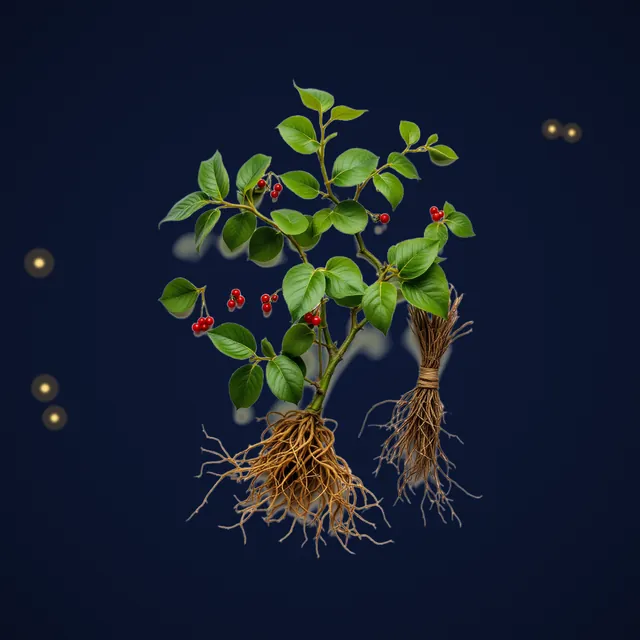
Sarsaparilla
Smilax ornata Lem. (syn. S. regelii), Smilax spp.
Polish folk names: kolcorośl lekarska, sarsaparyla, zarzaparrilla
Traditional use
[TRADITION] The Spaniards brought sarsaparilla root from Central America in the 16th century as a "blood-cleansing" remedy for syphilis, rheumatism and skin diseases. It did not work against syphilis, which we now know for certain. In the 19th century it became an ingredient of root beer-type drinks. The root contains steroidal saponins. There is almost no modern clinical research.
What it looks like
A thorny forest climber reaching a dozen or so metres. Stem angular, with prickles. Leaves heart-shaped, glossy, with veins curving from the base; at the base of the leaf stalk a pair of clinging tendrils. Roots very long, thin, even.
Harvest
Gathered: korzenie.
Form: decoction.
Lookalikes
- sassafras – a tree whose bark was used to make the original root beer; it contains harmful safrole
- Chinese smilax (Smilax china) – an Asian relative used in Chinese medicine
The information is educational and describes traditional use according to EMA/HMPC monographs (the European Medicines Agency and its Committee on Herbal Medicinal Products).It does not replace the advice of a doctor or pharmacist. Never eat a plant you are not 100% sure you recognise.