

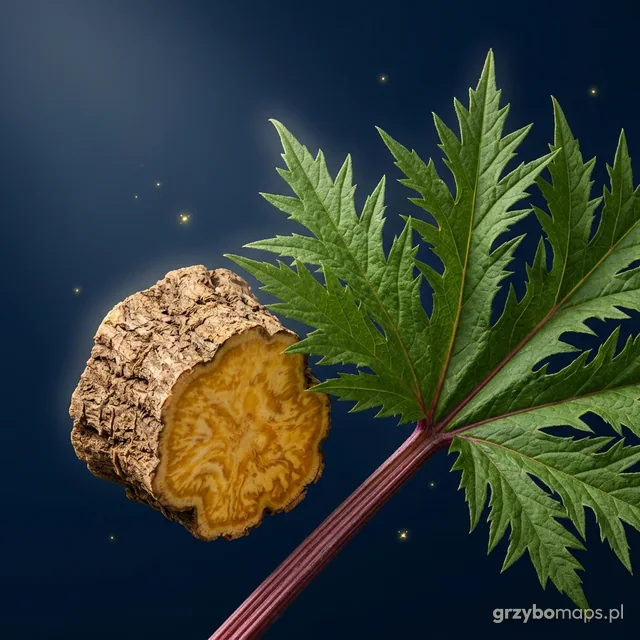
Chinese rhubarb
Rheum palmatum L., Rheum officinale Baill.
Polish folk names: rabarbar lekarski, rzewień chiński
Traditional use
According to the HMPC (EMA), for short-term use in occasional constipation (anthraquinones). In small doses it was formerly also a bitter for digestion.
What it looks like
Imposing cultivated perennial (up to 2 m); leaves very large, palmately lobed, on reddish stalks. Panicles of small, creamy or reddish flowers. Root thick, yellow-orange and marbled when broken.
Harvest
Gathered: root.
When: September – October.
Form: infusion.
Lookalikes
- Garden rhubarb (R. rhabarbarum): only the leaf stalks are edible; the leaf blades are poisonous (oxalic acid); the root is not a medicinal raw material
The information is educational and describes traditional use according to EMA/HMPC monographs (the European Medicines Agency and its Committee on Herbal Medicinal Products).It does not replace the advice of a doctor or pharmacist. Never eat a plant you are not 100% sure you recognise.