

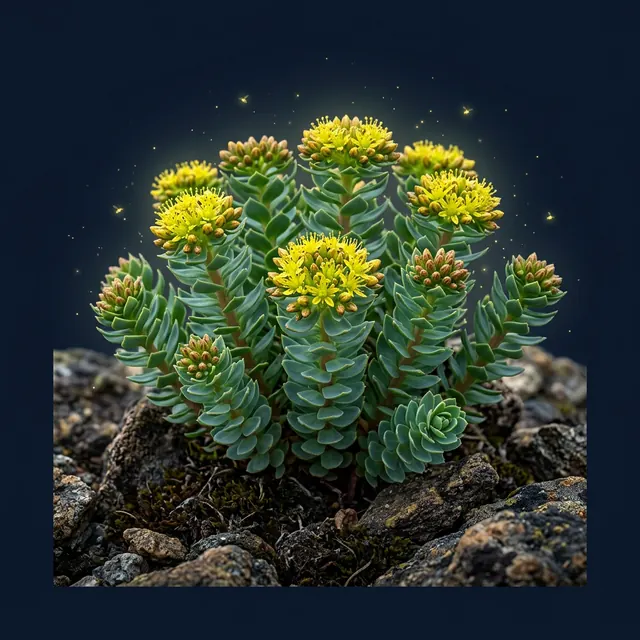
Roseroot
Rhodiola rosea L.
Polish folk names: złoty korzeń, arktyczny korzeń, rodiola
Traditional use
Traditionally (EMA/HMPC) for the temporary relief of symptoms of stress, such as fatigue and a feeling of weakness. The EMA stresses that the clinical studies are small and have serious quality shortcomings, so the indication rests only on long-standing use, not on evidence of efficacy.
What it looks like
Perennial up to 40 cm forming clumps. Stems thick and juicy. Leaves fleshy, bluish-green, waxy, toothed at the tip, densely alternate. Small yellow to reddish flowers in a dense, umbel-like cluster at the top of the shoot. The thick, twisted rhizome smells of rose when broken.
Harvest
Gathered: rhizome with roots.
Form: powder, tablets with extract, tincture.
Lookalikes
- Orpine (Sedum maximum): also a succulent with fleshy leaves, but its flowers are greenish-white and the rhizome does not smell of rose
- Houseleeks and garden stonecrops: fleshy leaves, but no thick rhizome with a rose scent
The information is educational and describes traditional use according to EMA/HMPC monographs (the European Medicines Agency and its Committee on Herbal Medicinal Products).It does not replace the advice of a doctor or pharmacist. Never eat a plant you are not 100% sure you recognise.