

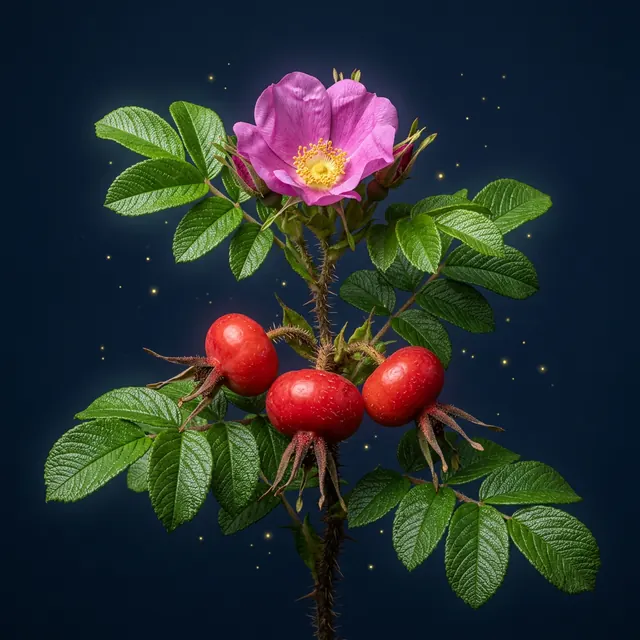
Japanese rose
Rosa rugosa Thunb.
Polish folk names: róża fałdzistolistna, róża japońska
Traditional use
The large, fleshy false fruits are very rich in vitamin C (about 275 mg per 100 g of fresh fruit) and carotene; 1–3 fruits cover the daily requirement of vitamin C. Rose hips, including this species, are a herbal raw material and an ingredient of herbal blends. Aromatic preserves are made from the petals. There is no EMA monograph; it is above all a source of vitamins, not a medicine.
What it looks like
Shrub up to 1.5 m forming dense thickets, with shoots densely covered in prickles and bristles. Leaves pinnate with 5–9 leathery, strongly wrinkled, glossy leaflets. Fragrant, purple-pink (rarely white) flowers 6–10 cm. Large, globose and flattened hips, 2–2.5 cm, red, with persistent sepals.
Harvest
Gathered: false fruit (hypanthium), petals.
When: June – September.
Form: infusion, syrup, preserve, jam (kitchen).
Lookalikes
- dog rose – smaller, elongated fruit, smooth leaves; harmless
- other garden roses – similar fruit; harmless
The information is educational and describes traditional use according to EMA/HMPC monographs (the European Medicines Agency and its Committee on Herbal Medicinal Products).It does not replace the advice of a doctor or pharmacist. Never eat a plant you are not 100% sure you recognise.