

Houseleek
Sempervivum tectorum L.
Polish folk names: rojnik, odmładzaniec
Traditional use
In folk medicine fresh, crushed leaves and their juice were applied, cooling and astringent, to burns, bites, warts and irritated skin, much like aloe. In Serbia the juice was dropped into the ear for earache. Laboratory studies indicate an antibacterial and healing-supporting effect, but there are no clinical studies. There is no EMA monograph. Planted on roofs and walls, by old tradition it was meant to protect the house from lightning.
What it looks like
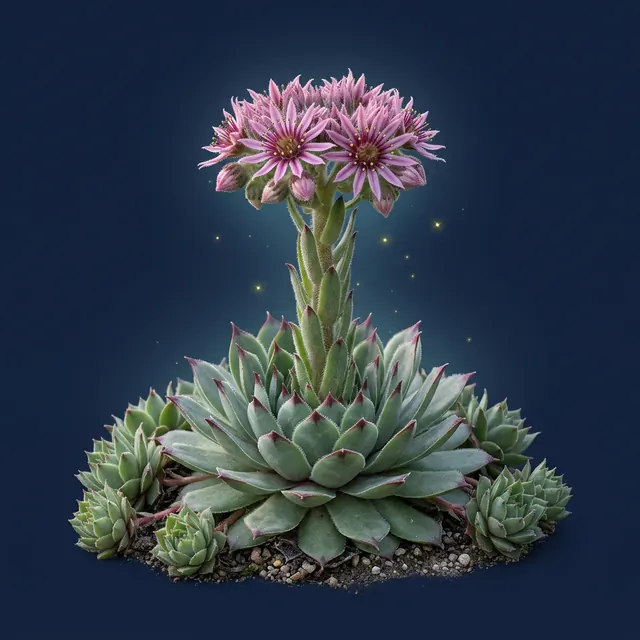
Thick, compact rosette of fleshy, hairless, grey-green leaves with reddish tips and fringed margins. Smaller rosettes grow around it on runners. In summer a hairy stem rises from the centre of the rosette, bearing pink-purple star-shaped flowers; after flowering the rosette dies.
Harvest
Gathered: fresh leaves (juice).
When: May – September.
Form: poultice of a fresh leaf, leaf juice.
Lookalikes
- mountain houseleek and Jovibarba – growing wild in Poland they are under strict protection; do not collect
- stonecrops – fleshy leaves, but not in compact rosettes
The information is educational and describes traditional use according to EMA/HMPC monographs (the European Medicines Agency and its Committee on Herbal Medicinal Products).It does not replace the advice of a doctor or pharmacist. Never eat a plant you are not 100% sure you recognise.