

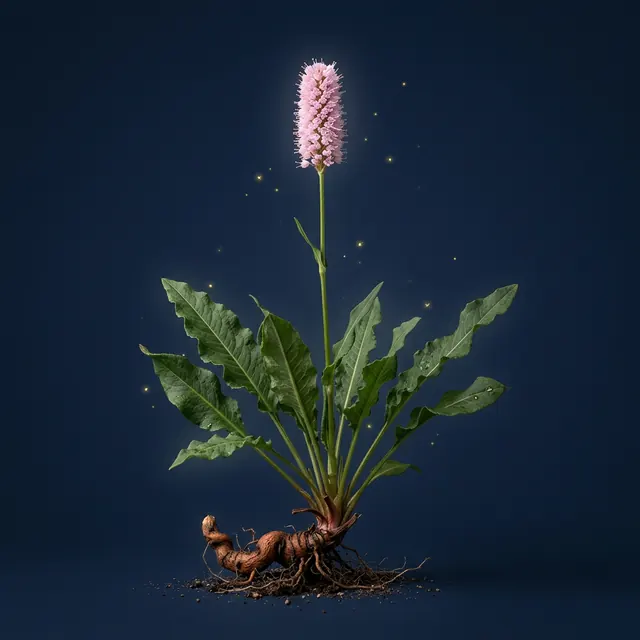
Bistort
Bistorta officinalis Delarbre (syn. Polygonum bistorta L.)
Polish folk names: wężownik
Traditional use
No EMA monograph. The rhizome contains more than 3% tannins and is astringent. In folk medicine a decoction was used for diarrhoea and catarrhs of the digestive tract, for rinsing the mouth and throat in inflammations and thrush, and externally for slow-healing skin lesions. A 2020 laboratory study showed antibacterial and anti-inflammatory activity of the extract, which explains the old use on the skin; there are no clinical studies. The young leaves were sometimes eaten like spinach.
What it looks like
Perennial of damp meadows, 20–80 cm tall. From a rosette of long-stalked, ovate-lanceolate leaves with wavy margins, grey-green beneath, rises a single sparsely leafy stem. At the top, a dense, cylindrical spike of pink flowers 3–7 cm long. Rhizome thick, reddish-brown, bent into an S like a snake, pinkish when broken.
Harvest
Gathered: rhizome, young leaves (kitchen).
When: September – October.
Form: decoction, rinse, compress.
Lookalikes
- Amphibious bistort – also has pink spikes, but grows in water or right beside it, with a leafy stem and without long basal leaves
- Redshank and other knotweeds – smaller flower clusters, leaves often with a dark blotch; harmless
The information is educational and describes traditional use according to EMA/HMPC monographs (the European Medicines Agency and its Committee on Herbal Medicinal Products).It does not replace the advice of a doctor or pharmacist. Never eat a plant you are not 100% sure you recognise.