

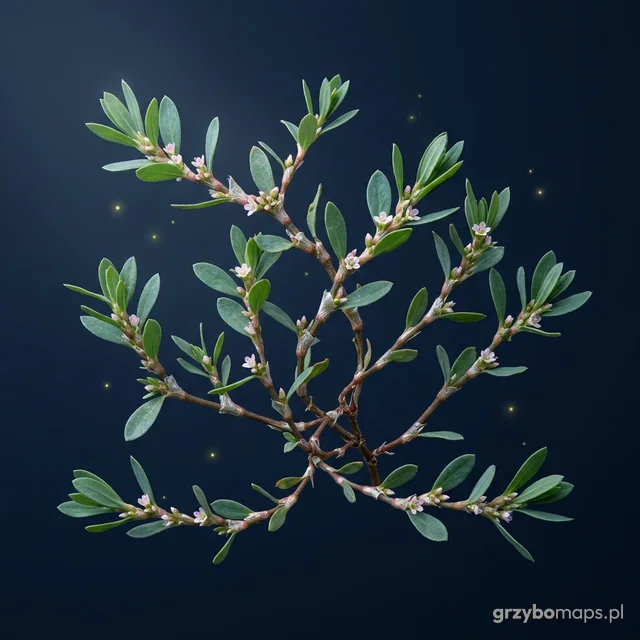
Knotgrass
Polygonum aviculare L.
Polish folk names: podróżnik, świńska trawa, wróble języczki
Traditional use
Traditionally (EMA/HMPC) in mild urinary tract complaints, in cough with a cold and as a decoction for rinsing in irritation of the mouth and throat.
What it looks like
A low, creeping plant of paths and farmyards, with branching stems and membranous sheaths at the nodes. Leaves small, elliptic, flowers tiny, greenish-white or pink, in the leaf axils.
Harvest
Gathered: herb (aerial parts).
When: June – September.
Form: infusion, decoction for rinsing.
Lookalikes
- Black bindweed: climbs and twines, heart-shaped leaves
- Russian vine: large climber, flowers in clusters
The information is educational and describes traditional use according to EMA/HMPC monographs (the European Medicines Agency and its Committee on Herbal Medicinal Products).It does not replace the advice of a doctor or pharmacist. Never eat a plant you are not 100% sure you recognise.