

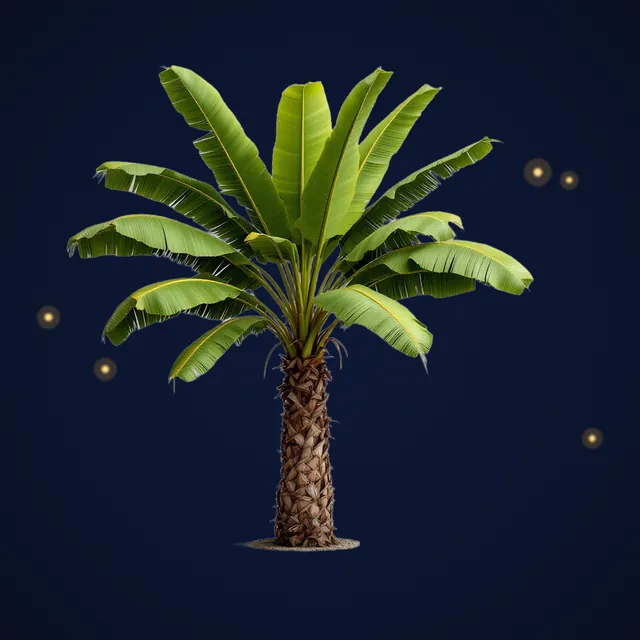
Traveller's tree
Ravenala madagascariensis Sonn.
Polish folk names: drzewo podróżników, rawenala, palma podróżnych
Traditional use
[TRADITION] In Madagascar ravenala is above all a building material: roofs and walls of huts are made from the leaves. Rainwater collects in the channels at the base of the leaves, and travellers drank it when needed. In folk medicine young leaves were laid on wounds, and an edible fat was rendered from the seeds. There are no clinical studies.
What it looks like
A palm-like plant up to 10–20 m. At the top of the trunk huge banana-like leaves arranged in one plane form a flat fan. Flowers white, in boat-shaped bracts. Seeds brown, in a bright blue aril.
Harvest
Gathered: leaves, water from the leaf sheaths, fat from the seeds.
Form: leaf poultice (tradition), budulec.
Lookalikes
- banana plant – similar leaves, but arranged spirally, not in a flat fan
- white bird of paradise (Strelitzia nicolai) – a relative from southern Africa with a similar habit
The information is educational and describes traditional use according to EMA/HMPC monographs (the European Medicines Agency and its Committee on Herbal Medicinal Products).It does not replace the advice of a doctor or pharmacist. Never eat a plant you are not 100% sure you recognise.