

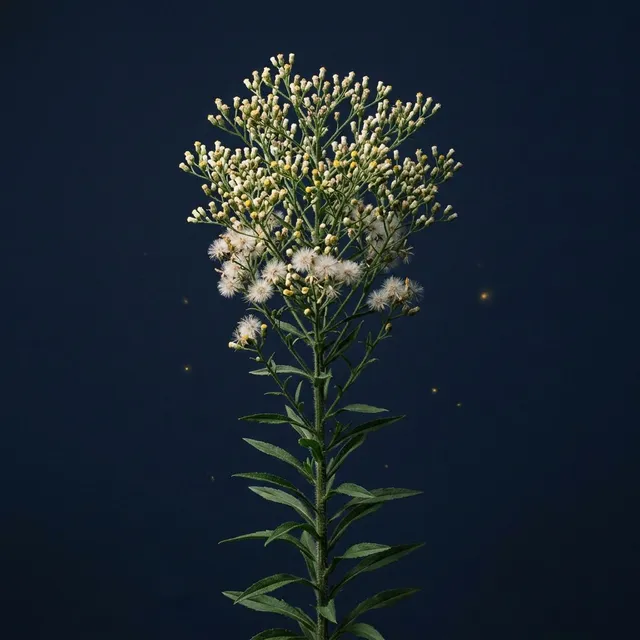
Canadian horseweed
Erigeron canadensis L.
Polish folk names: konyza, przymiotno, koniza kanadyjska
Traditional use
A newcomer from North America, known in Poland since the 18th century, today a common weed of wasteland, roadsides and fallow fields. In folk medicine an infusion of the herb was drunk for heavy bleeding, diarrhoea and as a diuretic, and compresses were applied to bruises, contusions, ulcers and burns. The herb contains essential oil, tannins and flavonoids. Reviews of studies describe anti-inflammatory and astringent effects, but mainly in the laboratory. There is no official EMA monograph and no recommendations on efficacy and safety.
What it looks like
Annual plant with a straight, stiff, hairy stem 30–150 cm tall, densely covered in narrow, lanceolate leaves. At the top a branched panicle of hundreds of tiny, inconspicuous flower heads with whitish rays and a yellowish centre. Flowers from July to September, then turns fluffy with white downy seeds.
Harvest
Gathered: herb (aerial parts).
When: July – September.
Form: infusion, compresses.
Lookalikes
- annual fleabane – similar, but the flower heads are large, white, like small daisies
- common groundsel – yellow flower heads without petals, pinnately lobed leaves; poisonous (pyrrolizidine alkaloids)
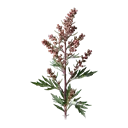
- mugwort – different, pinnately divided leaves, silvery underneath
The information is educational and describes traditional use according to EMA/HMPC monographs (the European Medicines Agency and its Committee on Herbal Medicinal Products).It does not replace the advice of a doctor or pharmacist. Never eat a plant you are not 100% sure you recognise.