

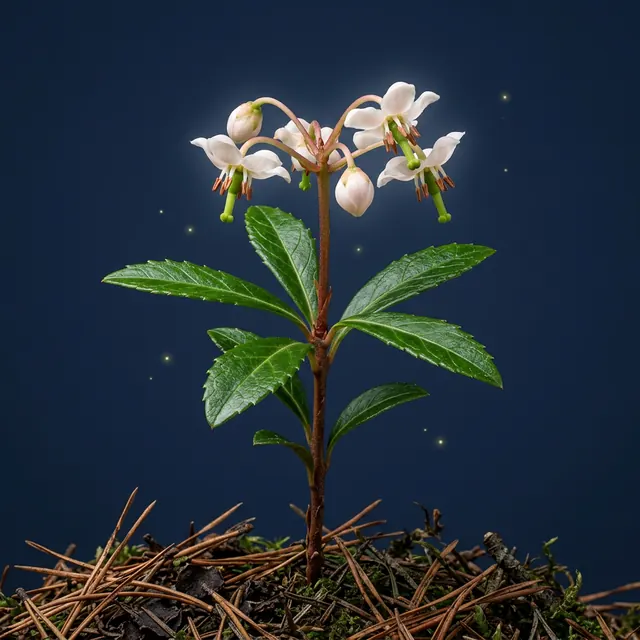
Pipsissewa
Chimaphila umbellata (L.) W.P.C. Barton
Polish folk names: gruszyczka baldaszkowa, zimozieleń, wraźnik, pomocnik
Traditional use
A medicinal plant of folk medicine and homeopathy; the Polish name “pomocnik” (helper) is linked precisely to folk healing. In North America the Native Americans used a decoction for tuberculosis, and old pharmacopoeias listed it as a diuretic. It contains chimaphilin, isohomoarbutin (a compound related to the arbutin of bearberry) and methyl salicylate. A 2023 review describes many effects in the laboratory, but there are no clinical studies and no EMA monograph.
What it looks like
Low subshrub of pine forests, 5–15 cm, with underground runners. Leaves evergreen, leathery, lanceolate, dark green and glossy, finely serrated, 3–6 in false whorls on the lower part of the stem. At the top a corymb of a few white or pinkish, drooping flowers with 5 petals and a thick style. The fruit is a capsule that splits open with 5 valves.
Harvest
Gathered: herb (leaves).
Form: infusion.
Lookalikes
- wintergreens (Pyrola, e.g. greenish, round-leaved) – grow in the same pine forests, leaves in a rosette, flowers in a raceme
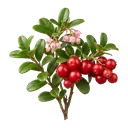
- lingonberry – leathery evergreen leaves, but with entire margins, and red fruits
The information is educational and describes traditional use according to EMA/HMPC monographs (the European Medicines Agency and its Committee on Herbal Medicinal Products).It does not replace the advice of a doctor or pharmacist. Never eat a plant you are not 100% sure you recognise.