

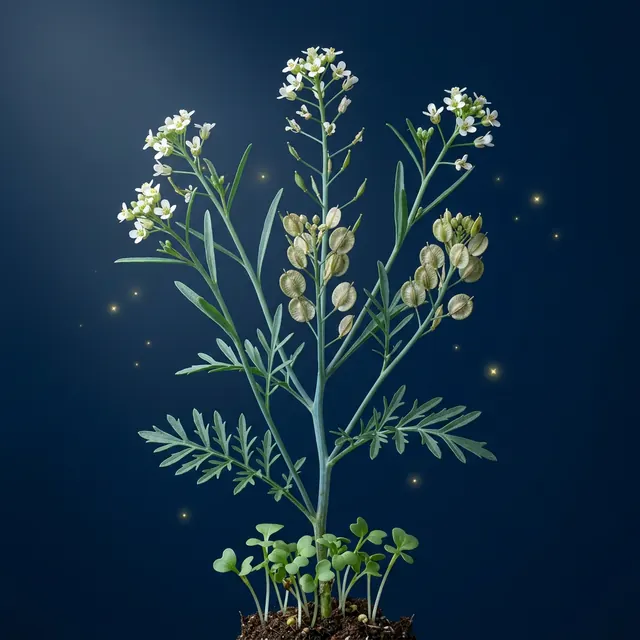
Garden cress
Lepidium sativum L.
Polish folk names: rzeżucha, rzeżucha ogrodowa, rzeżucha siewna
Traditional use
Above all a vegetable and seasoning: sprouts and young leaves are added to soups, sauces, salads and curd cheese spreads, and before Easter it is sown as a table decoration. It is rich in vitamin C and very rich in vitamin K. In folk medicine the leaves were regarded as an anti-scurvy and mildly diuretic remedy, and the seeds were used in poultices. There is no EMA monograph, and strong clinical studies are lacking.
What it looks like
Annual plant up to 30–60 cm, blue-green. Lower leaves pinnate, upper ones narrow and entire. Tiny white or pinkish 4-petalled flowers in racemes. The fruit is a roundish silicle 5–6 mm, winged at the top. In the kitchen we usually see the sprouts with three-lobed seed leaves.
Harvest
Gathered: young leaves and sprouts, seeds.
When: March – September.
Form: kitchen (sprouts, salads, sandwiches), spice.
Lookalikes
- cuckooflower and large bittercress (Cardamine) – other plants with the same folk name; harmless
- shepherd's purse – seed pods heart-shaped, not round; harmless
The information is educational and describes traditional use according to EMA/HMPC monographs (the European Medicines Agency and its Committee on Herbal Medicinal Products).It does not replace the advice of a doctor or pharmacist. Never eat a plant you are not 100% sure you recognise.