

Creeping cinquefoil
Potentilla reptans L.
Traditional use
In folk medicine it was used like other tannin-rich cinquefoils, as an astringent. There is no EMA monograph (only tormentil has one). Studies concern mainly the root: alcohol extracts had a moderate antibacterial effect in the laboratory, and a protective effect on the brain was described in a study on rats. These are preliminary results, without studies in humans.
What it looks like
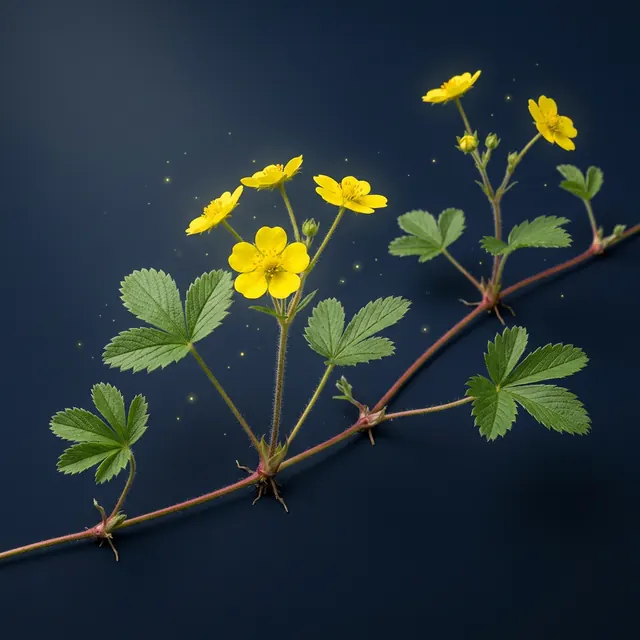
Perennial with creeping shoots 30–100 cm long that root at the nodes. Leaves palmate, usually with 5 leaflets, leaflets obovate and serrated. Flowers yellow, 5-petalled, 1.5–2.5 cm across, solitary on long stalks from the leaf axils.
Harvest
Gathered: herb (aerial parts), rhizome.
When: June – September.
Form: infusion, decoction.
Lookalikes
- silverweed – pinnate leaves, silvery underneath; harmless
- tormentil – usually 4 petals, leaves with three leaflets; harmless, a raw material with an EMA monograph
- wild strawberry – white flowers, leaves with three leaflets; harmless

The information is educational and describes traditional use according to EMA/HMPC monographs (the European Medicines Agency and its Committee on Herbal Medicinal Products).It does not replace the advice of a doctor or pharmacist. Never eat a plant you are not 100% sure you recognise.