

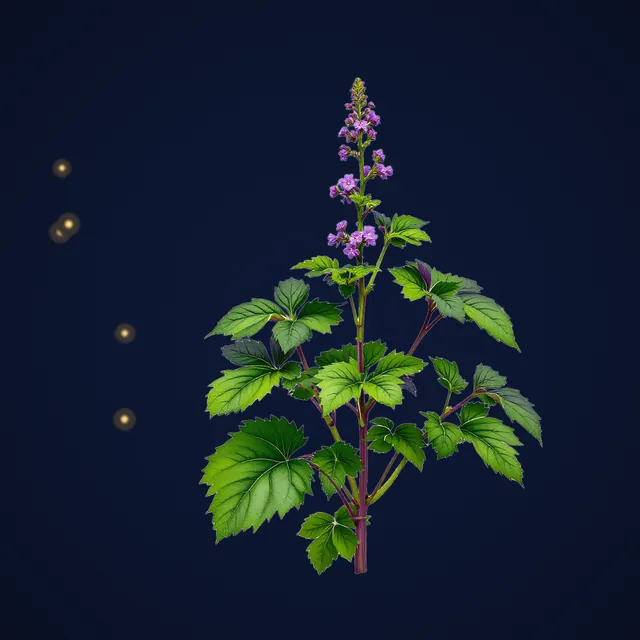
Perilla
Perilla frutescens (L.) Britton
Polish folk names: shiso, zisu, bazylia japońska, kkaennip
Traditional use
Perilla leaves are an everyday seasoning in Japan (shiso) and Korea (kkaennip): they are served with fish, pickles and rice. [TRADITION] In Chinese medicine the leaf (zisu ye) is used at the start of a cold with chills and for nausea, also after eating spoiled fish and crab. The seed oil is rich in alpha-linolenic acid. There are few clinical studies.
What it looks like
An annual 40–100 cm tall with a four-angled, hairy stem. Leaves broad, egg-shaped, wrinkled, deeply toothed, green or purple. Flowers small, white or pinkish, in spikes. Smells of aniseed and cinnamon. In Poland it does well in the garden.
Harvest
Gathered: leaves, seeds.
When: July – September.
Form: infusion, spice, seed oil.
Lookalikes
- basil – similar habit, but the leaves are smooth and the scent is different
- coleus – an ornamental relative with colourful leaves, inedible
- nettle – leaves similarly toothed, but they sting
The information is educational and describes traditional use according to EMA/HMPC monographs (the European Medicines Agency and its Committee on Herbal Medicinal Products).It does not replace the advice of a doctor or pharmacist. Never eat a plant you are not 100% sure you recognise.