

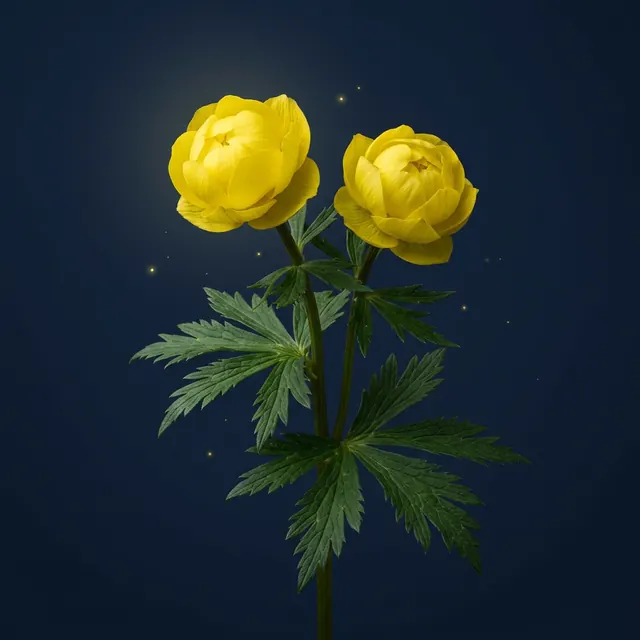
Globeflower
Trollius europaeus L.
Polish folk names: róża górska, górska różyczka, róża żółta, róża kłodzka
Symptoms of poisoning
After eating it, irritation of the mouth and digestive tract is possible (nausea, vomiting, diarrhoea).
What it looks like
Perennial, 10–50 cm, on damp meadows and in the mountains. Leaves palmately lobed, with 3–5 cut segments. Usually 2–3 globe-shaped, lemon-yellow flowers, 2.5–5 cm, on the stem, “double” like a small rose: the tepals curve inwards and cover the centre. The fruit is a cluster of follicles with black seeds.
What it is sometimes confused with
- buttercups – also yellow, but the flowers are flat and open; also poisonous
- marsh-marigold (kingcup) – yellow flowers on wet meadows, heart-shaped leaves, not palmate; also poisonous
The information is educational and describes traditional use according to EMA/HMPC monographs (the European Medicines Agency and its Committee on Herbal Medicinal Products).It does not replace the advice of a doctor or pharmacist. Never eat a plant you are not 100% sure you recognise.