

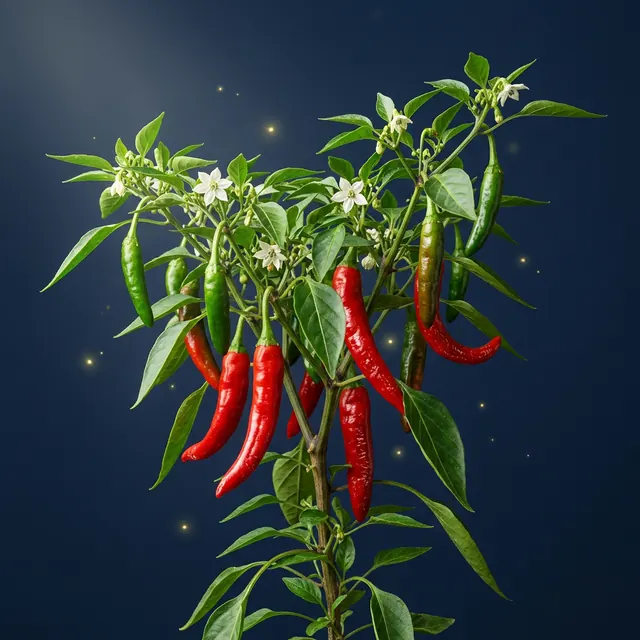
Chilli pepper
Capsicum annuum L. (owoce ostre; w lecznictwie też C. frutescens L.)
Polish folk names: pieprz turecki, pieprz hiszpański, chili, pieprz cayenne, pieprzowiec
Traditional use
Well-established use (EMA/HMPC): hot pepper preparations for the skin (plasters, ointments) ease muscle pain, e.g. in the lower back. Clinical studies have shown better relief than placebo. Capsaicin first irritates the pain receptors in the skin and then “desensitises” them. In the kitchen, sweet varieties are a vegetable and hot ones a spice.
What it looks like
A plant that is annual in Poland, 20–50 cm. Leaves lanceolate to ovate, pointed. Flowers white or yellowish, solitary in the leaf axils, with violet anthers. The fruit is a barely juicy, hollow berry – in hot varieties usually elongated and red.
Harvest
Gathered: fruit.
When: August – September.
Form: spice, capsaicin plaster and ointment.
Lookalikes
- Ornamental nightshades (e.g. Jerusalem cherry): the red, round pot-plant fruits are poisonous – pepper fruits are hollow inside, with seeds on the placenta
The information is educational and describes traditional use according to EMA/HMPC monographs (the European Medicines Agency and its Committee on Herbal Medicinal Products).It does not replace the advice of a doctor or pharmacist. Never eat a plant you are not 100% sure you recognise.