

Papaya
Carica papaya L.
Polish folk names: papaja, drzewo melonowe, pawpaw
Traditional use
A ripe papaya is an ordinary, easily digestible fruit. The milky latex of unripe fruits contains papain, an enzyme that breaks down protein: in the kitchen it tenderises meat, and in the tropics leaves and pulp were applied to wounds that were slow to heal. [TRADITION] The seeds and latex were given for intestinal worms. Good clinical studies are lacking, and papain on wounds is not recommended today because of allergies.
What it looks like
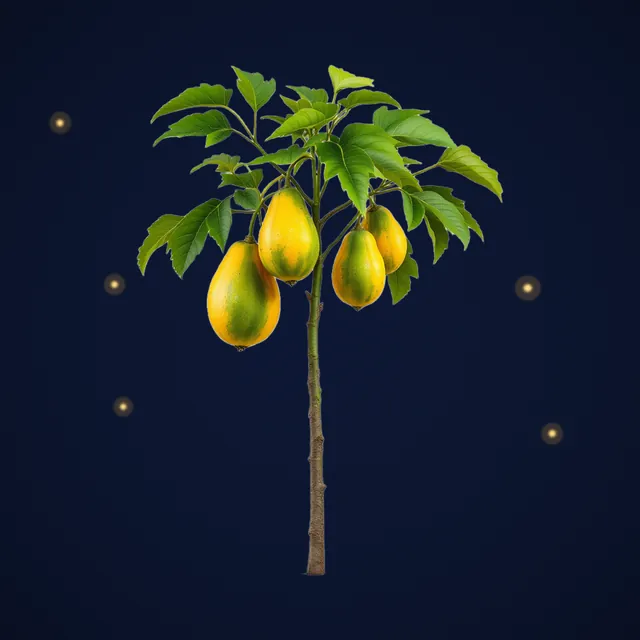
A fast-growing plant with a single, soft trunk 3–8 m tall, marked with leaf scars. At the top a plume of huge, palmately cut leaves on long, hollow stalks. The fruits hang below the leaves by the trunk; when ripe they have orange flesh and black seeds.
Harvest
Gathered: fruits, leaves, milky latex (papain).
Form: fruit (food), poultice (tradition).
Lookalikes
- pawpaw (Asimina triloba) – a different tree with the same common name
- babaco and mountain papaya – relatives with smaller fruits
The information is educational and describes traditional use according to EMA/HMPC monographs (the European Medicines Agency and its Committee on Herbal Medicinal Products).It does not replace the advice of a doctor or pharmacist. Never eat a plant you are not 100% sure you recognise.