

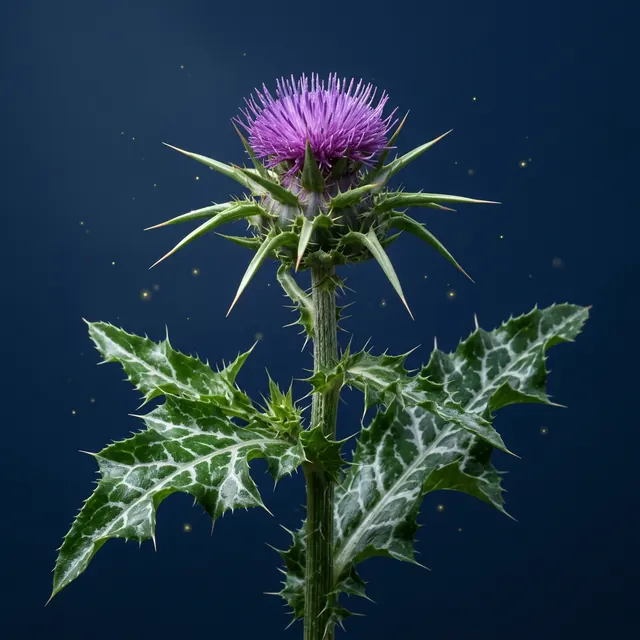
Milk thistle
Silybum marianum (L.) Gaertn.
Polish folk names: ostropest
Traditional use
Traditionally (EMA/HMPC) for symptoms of indigestion, a feeling of fullness and as support for liver function, after serious diseases have been ruled out by a doctor. Studies in people with liver disease suggest benefits, but are too weak for firm conclusions. Main component: silymarin.
What it looks like
Plant 1–1.5 m tall (up to 2 m), cultivated and sometimes naturalised. Large, glossy, sinuately lobed leaves with white blotches along the veins, clasping the stem and spiny at the margins. Ovoid, purple flower heads 4–5 cm, with scales ending in a long, bent-back spine. Fruits: glossy achenes 6–7 mm with a pappus.
Harvest
Gathered: fruit (achenes).
When: August – September.
Form: decoction, powder (ready-made preparations).
Lookalikes
- thistles and artichokes - similar spiny flower heads, but the leaves have no white spots; harmless
The information is educational and describes traditional use according to EMA/HMPC monographs (the European Medicines Agency and its Committee on Herbal Medicinal Products).It does not replace the advice of a doctor or pharmacist. Never eat a plant you are not 100% sure you recognise.