

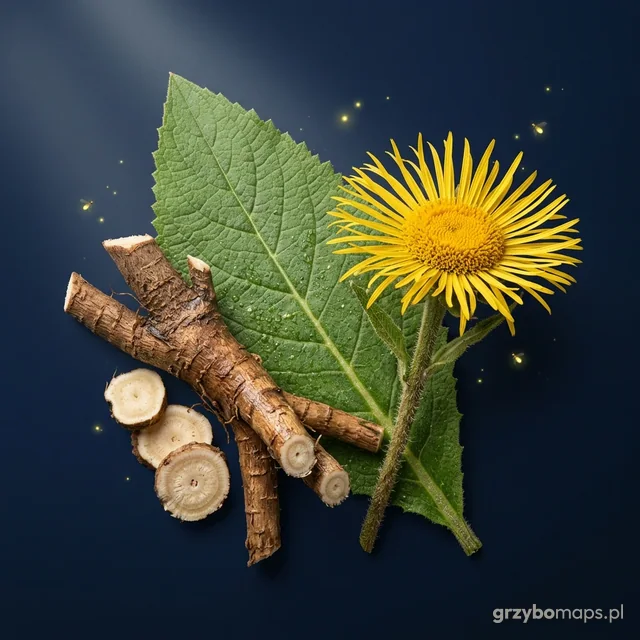
Elecampane
Inula helenium L.
Polish folk names: omen, dziewięćsił ogrodowy
Traditional use
Traditionally the root was used as an expectorant for wet cough and catarrh of the respiratory tract. No EMA monograph; Commission E assessed it negatively (insufficient evidence, high risk of allergies).
What it looks like
Imposing perennial 1–2 m tall. Huge, elliptical leaves, grey and felty beneath. Large yellow flower heads with numerous narrow ray florets. Thick, fleshy root that smells of violets and camphor.
Harvest
Gathered: root with rhizome.
When: September – October.
Form: decoction, syrup.
Lookalikes
- Ragwort and other yellow daisy-family plants: elecampane has very large leaves, felty underneath, and flower heads up to 7 cm with narrow, numerous petals
The information is educational and describes traditional use according to EMA/HMPC monographs (the European Medicines Agency and its Committee on Herbal Medicinal Products).It does not replace the advice of a doctor or pharmacist. Never eat a plant you are not 100% sure you recognise.