

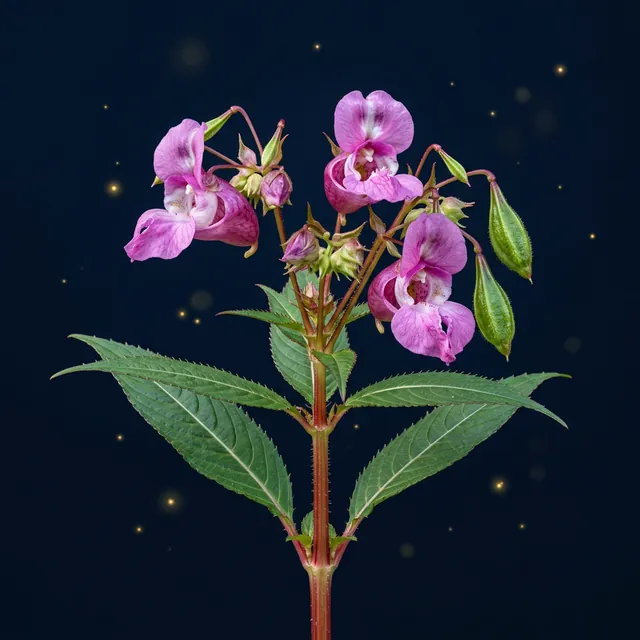
Himalayan balsam
Impatiens glandulifera Royle
Polish folk names: niecierpek himalajski, balsamina
Traditional use
Ripe seeds have a nutty flavour and can be eaten raw or roasted, like sesame. In small amounts, the flowers are good for decorating salads and desserts and for syrup. It comes from the Himalayas, where the seeds were eaten and pressed for oil. It is a very good honey plant and blooms until the first frosts.
What it looks like
An annual 1–2.5 m tall, the tallest of Poland's annual plants. Stem thick, juicy, reddish, hollow inside. Leaves lanceolate, toothed, in whorls of three, with glands at the base. Large pink to purple helmet-shaped flowers with a spur, fragrant, from July to October. The fruits are green pods that burst at a touch.
Harvest
Gathered: seeds, flowers.
When: July – September.
Form: seeds raw or roasted, flowers to decorate dishes.
Lookalikes
- touch-me-not balsam (Impatiens noli-tangere) – native, lower, with yellow flowers; it also shoots out its seeds
- small balsam (Impatiens parviflora) – tiny, pale yellow flowers, very common and also invasive in forests
The information is educational and describes traditional use according to EMA/HMPC monographs (the European Medicines Agency and its Committee on Herbal Medicinal Products).It does not replace the advice of a doctor or pharmacist. Never eat a plant you are not 100% sure you recognise.