

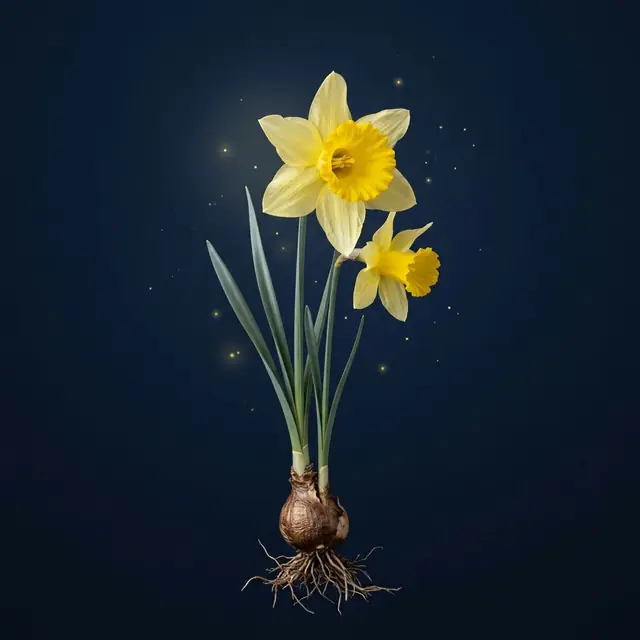
Jonquil
Narcissus pseudonarcissus L. i inne narcyzy
Polish folk names: żonkil, narcyz
Symptoms of poisoning
After eating a bulb or leaves, from 15 minutes to a few hours: nausea, severe vomiting, diarrhoea, stomach pain, drooling. After a large amount, a drop in blood pressure and heart rhythm disturbances. Sap on the hands, which florists often deal with, causes an itchy rash.
What it looks like
Bulbous perennial, 20–40 cm. Leaves narrow, flat, grey-green. On a leafless stem a single flower: six pale yellow or white petals and a long, darker yellow trumpet-shaped corona. Blooms in March and April.
What it is sometimes confused with
- onion and shallot – daffodil bulbs are sometimes mistaken for them in storage, but they do not smell of onion
- wild garlic leaves – young daffodil leaves also grow in early spring, but they have no garlic smell
The information is educational and describes traditional use according to EMA/HMPC monographs (the European Medicines Agency and its Committee on Herbal Medicinal Products).It does not replace the advice of a doctor or pharmacist. Never eat a plant you are not 100% sure you recognise.
Frequently asked questions
Is daffodil (jonquil) poisonous to cats?
Yes. Most of the poison is in the bulb, which is easily mistaken for an edible onion. Dogs that dig up the bulbs vomit and drool.
Is daffodil (jonquil) poisonous to dogs?
Yes. The symptoms are similar to those in cats, and their severity depends on how much of the plant was eaten and on the dog's size.
Is daffodil (jonquil) poisonous to children?
Yes. Keep the plant out of the reach of small children.
What should I do if an animal or a child eats a piece of this plant?
Remove the remains from the mouth, give a little water and keep a piece of the plant. For an animal, call a vet; for a child, a doctor. If symptoms are worrying, call 112.