

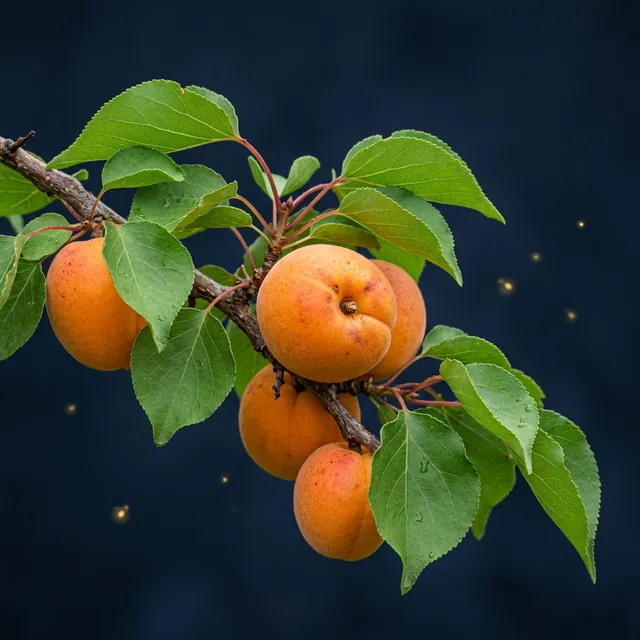
Apricot
Prunus armeniaca L.
Polish folk names: morela, abrykos
Traditional use
Ripe fruits are sweet and juicy. The stones contain amygdalin (the so-called “vitamin B17” is a myth), which releases hydrogen cyanide. Do not eat the kernels of the stones and do not treat them as a supplement: severe poisonings have been described.
What it looks like
Tree up to 6–8 m. Leaves broadly ovate, pointed at the tip, finely serrated edge. Flowers white-pink, blooming very early, before the leaves appear, often as early as March or April. Fruit round, velvety-hairy, yellow-orange.
Harvest
Gathered: fruits.
When: July – August.
Form: fresh, suszone, jam, kompot.
Lookalikes
- peach – fruit hairy, slightly larger, leaves broader
- plum – fruit with a waxy bloom, tree less heat-loving
The information is educational and describes traditional use according to EMA/HMPC monographs (the European Medicines Agency and its Committee on Herbal Medicinal Products).It does not replace the advice of a doctor or pharmacist. Never eat a plant you are not 100% sure you recognise.