

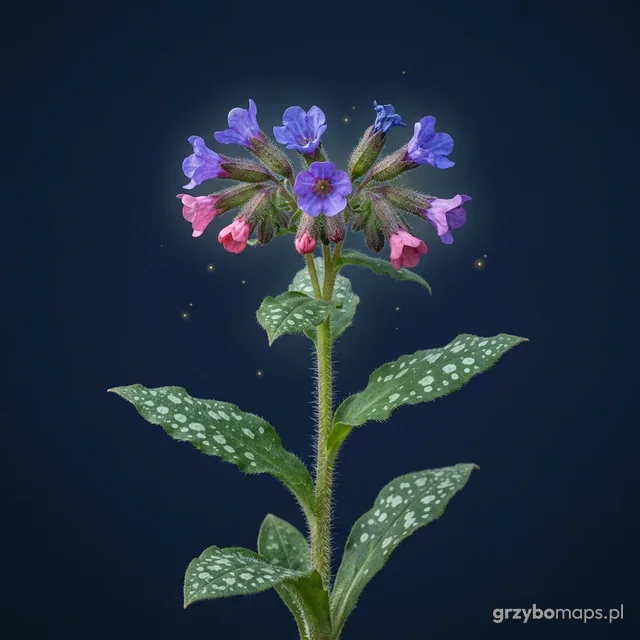
Lungwort
Pulmonaria officinalis L.
Polish folk names: miodunka lekarska, płucnik
Traditional use
Traditionally used for coughs and catarrh of the respiratory tract – the Latin name (pulmo – lung) comes from the spotted leaves resembling lungs. No EMA monograph and no clinical studies.
What it looks like
Low, early-spring perennial 10–30 cm tall, roughly hairy. Leaves ovate with pale spots. The flowers in the inflorescences are pink (young) and blue-violet (older) at the same time.
Harvest
Gathered: herb (aerial parts).
When: March – May.
Form: infusion.
Lookalikes
- Dusky lungwort (P. obscura): leaves without white spots, more common in Poland
- Iceland moss: a lichen, not a flowering plant
The information is educational and describes traditional use according to EMA/HMPC monographs (the European Medicines Agency and its Committee on Herbal Medicinal Products).It does not replace the advice of a doctor or pharmacist. Never eat a plant you are not 100% sure you recognise.