

Neem
Azadirachta indica A.Juss.
Polish folk names: neem, nim, drzewo wioskowej apteki
Traditional use
[TRADITION] In India neem is called the “village pharmacy”. Twigs are used to clean teeth, a leaf bath is used for skin diseases, and dried leaves are put between clothes and with grain against insects. Seed extracts (azadirachtin) are a recognised plant protection agent. Studies on neem toothpaste and mouthwash suggest a reduction in dental plaque, but they are small.
What it looks like
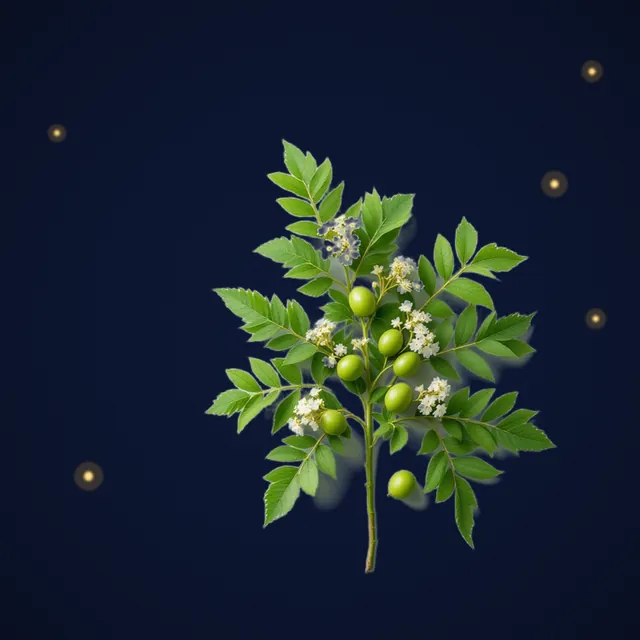
An evergreen tree 15–20 m tall with a broad crown. Leaves pinnate, with 8–18 sickle-shaped, serrated leaflets. Flowers small, white, fragrant, in drooping panicles. Fruits resemble small olives, yellow when ripe.
Harvest
Gathered: leaves, twigs, bark, seed oil (external use only).
Form: decoction for washing, twig for cleaning teeth, oil (external).
Lookalikes
- chinaberry (Melia azedarach) – similar leaves, but bipinnate; its yellow fruits are poisonous
The information is educational and describes traditional use according to EMA/HMPC monographs (the European Medicines Agency and its Committee on Herbal Medicinal Products).It does not replace the advice of a doctor or pharmacist. Never eat a plant you are not 100% sure you recognise.